The right boundary can make a yard feel more private, polished, and useful. These fence ideas cover modern, traditional, budget-friendly, and low-maintenance approaches for American homes. The best choice depends on your property, climate, upkeep expectations, and preferred level of privacy. For a closer look at this, see Low Maintenance Fence Options.
Direct answer: Good fencing should solve a specific yard problem while complementing your home. Wood offers warmth and flexibility, while vinyl reduces routine maintenance. Metal suits open views and security, while composite balances privacy with easier care. Plants, lattice, and mixed materials can soften any design.
Fence Design at a Glance
| Design option | Best suited for | Privacy level | Maintenance |
|---|---|---|---|
| Horizontal wood slats | Modern backyards | High | Moderate |
| Board-on-board wood | Full backyard privacy | High | Moderate |
| Shadowbox panels | Shared boundaries | Medium | Moderate |
| Vinyl panels | Low-maintenance yards | High | Low |
| Composite panels | Contemporary homes | High | Low |
| Metal pickets | Front yards and views | Low | Low |
| Wood-and-metal combinations | Modern exteriors | Medium to high | Moderate |
| Lattice-topped panels | Gardens and patios | Medium | Moderate |
| Living screens | Natural landscapes | Medium to high | Moderate |
| Picket designs | Front-yard charm | Low | Moderate |
Key Takeaways
- Choose the purpose before choosing the material.
- Solid panels create privacy but can make compact yards feel enclosed.
- Open designs protect views and suit front yards well.
- Mixed materials can connect modern homes with natural landscaping.
- Consider gates, slopes, drainage, and maintenance before installation.
- Check local requirements and HOA rules before finalizing height or placement.
15 Fence Ideas Worth Considering
1. Horizontal Wood Slats
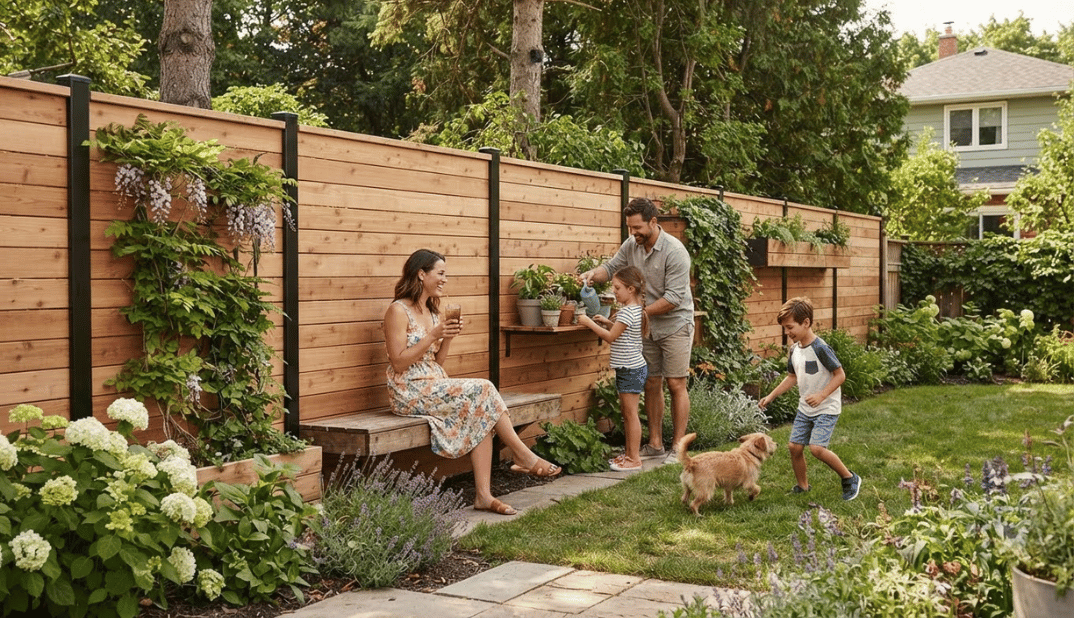
Horizontal boards give a backyard a clean, contemporary appearance. They visually stretch the property because your eye follows each long line. Cedar and other exterior-grade woods pair especially well with modern architecture.
Keep board spacing consistent across the entire run. Small gaps can create airflow while maintaining useful screening. Dark posts can add contrast without making the design feel busy.
2. Classic Board-on-Board Privacy
Overlapping vertical boards create one of the strongest choices for backyard screening. The overlapping arrangement also helps hide gaps that may develop as natural wood changes. It works with traditional, craftsman, farmhouse, and many transitional homes.
Wood still requires regular inspection and surface care. If you plan to finish your own boards, Renovixa’s wood staining guide explains preparation and finishing fundamentals. Matching the stain with decks or trim can also create a more unified exterior.
3. Shadowbox Panels for Shared Boundaries
Shadowbox construction alternates boards along opposite sides of the supporting rails. This creates a finished appearance from both neighboring properties. It also permits more airflow than completely solid construction.
This design works especially well along a shared side yard. The small openings make the boundary feel lighter up close. Discuss placement with neighbors before work begins to avoid preventable property-line problems.
4. White Vinyl for Easy Upkeep
White vinyl panels suit homeowners who want a clean look with minimal finishing work. They do not require the repeated staining associated with exposed natural lumber. Full-height panels can also provide strong visual separation around patios and backyards.
The bright surface pairs naturally with colonial and traditional homes. Neutral tan and gray products can fit newer architecture better. Compare physical samples outdoors because sunlight can change how colors appear.
5. Composite Panels for Modern Privacy
Composite systems offer a wood-inspired look without the maintenance demands of natural boards. Dark brown, charcoal, and warm gray finishes work well around contemporary homes. Horizontal installations can create an architectural backdrop for outdoor seating.
The material often costs more upfront than basic lumber choices. That higher upfront cost may appeal to owners who prioritize reduced surface maintenance. Compare warranty terms and installation requirements between manufacturers before choosing a system.
6. Black Metal Around Front Yards
Slim black metal pickets create definition without blocking attractive views. This makes them useful along front yards, gardens, and properties facing open scenery. Their simple lines also complement both brick and painted exteriors.
Use landscaping behind the metal for a softer effect. Shrubs can provide seasonal screening while the structure maintains a clear boundary. This combination avoids the heavy appearance of a solid front enclosure.
7. Wood Boards With Black Metal Posts
Combining natural boards with dark metal posts creates a strong modern contrast. Metal supports also keep the structure from looking like one large wooden surface. The result can connect well with black windows, railings, or exterior lighting.
You can repeat the same wood tone on nearby outdoor surfaces. Renovixa’s hardwood decking guide can help when coordinating timber choices around a deck. Repeating two or three exterior materials usually produces a more intentional design.
8. Lattice-Topped Privacy Panels
A solid lower section with lattice above creates privacy without a wall-like appearance. The open upper section lets additional light and air reach a patio. Climbing plants can add another layer of texture later.
This format works well beside dining areas and garden seating. It also suits smaller yards where completely solid panels may feel visually heavy. Keep plant growth controlled so vines do not overwhelm the structure.
9. Narrow Vertical Slats
Slim vertical boards create crisp lines and can make shorter outdoor areas feel taller. Spacing can range from nearly solid to intentionally open. That flexibility lets you balance privacy against daylight.
This approach works especially well near contemporary patios. Repeating narrow vertical lines beside tall ornamental grasses creates visual rhythm. Choose durable exterior fasteners to prevent premature staining around connections.
10. Traditional Picket Styling
Picket layouts remain useful when curb appeal matters more than complete privacy. They define front gardens while keeping the home visible from the street. White finishes feel traditional, while natural wood looks warmer and more relaxed.
Adjust the proportions to match the house instead of copying a standard panel. Wider pickets create a stronger presence, while narrow ones appear lighter. A matching gate can turn the entrance into a deliberate design feature.
11. A Living Green Screen
Hedges and dense plantings can form a softer boundary than manufactured panels. They work particularly well where the landscape already has mature planting beds. Green screening can also reduce the visual hardness of nearby structures.
Plants require space, pruning, and climate-appropriate selection. Their water needs should also fit the rest of your landscaping plan. Renovixa’s lawn watering guide offers useful context when reviewing outdoor irrigation habits.
12. Mixed Wood and Masonry
Wood panels between brick, stone, or masonry columns create a substantial, custom look. The columns visually anchor long property lines and break large surfaces into smaller sections. This combination suits homes already using masonry on the facade.
Changes in yard elevation deserve careful planning before posts or columns are installed. Sloped properties may also need nearby drainage or grading solutions. Renovixa’s guide to building a retaining wall covers related planning considerations for uneven landscapes.
13. Stepped Panels on a Sloping Yard
A stepped layout keeps each section level while following the overall grade change. This creates a clear staircase effect along sloping properties. It can work with wood, vinyl, composite, and several manufactured panel systems.
Steeper sites need more preparation than flat yards. Gaps beneath panels may become important when pets or privacy are concerns. Measure the complete grade change before ordering materials or prefabricated sections.
14. Decorative Screen Panels
Laser-cut metal or patterned outdoor panels can turn a small boundary into a design feature. They work especially well around patios, hot tubs, and compact seating areas. Patterns allow partial screening without creating an entirely solid surface.
Use decorative panels selectively rather than covering every property line. A concentrated feature usually looks more purposeful than repeating an elaborate pattern everywhere. Pair it with simpler materials across longer runs.
15. A Gate as the Main Feature
An attractive gate can add personality to even a simple perimeter. Wider posts, distinctive hardware, or a small overhead arbor can clearly mark the entrance. The feature works especially well along pathways leading to patios or gardens.
Match its material with another nearby outdoor element. A gate might repeat deck boards, porch details, or exterior trim colors. Consistent finishes make separate outdoor projects feel connected.
How to Choose the Best Fence Ideas for Your Property

Start by identifying the main problem you need to solve. Privacy, pets, curb appeal, wind exposure, and boundary definition require different designs. Ranking those needs prevents appearance from overriding function.
Next, consider how much maintenance you want each year. Natural wood offers flexibility but usually needs more surface care. Vinyl, composite, and coated metal can reduce the need for recurring finishing tasks.
Finally, view the boundary as part of the entire outdoor layout. Decks, patios, planting beds, retaining walls, gates, and exterior colors should relate visually. That broader approach produces a yard that feels planned rather than assembled project by project.
Planning Before Installation
Confirm property boundaries before installing permanent posts. Also review municipal requirements, utility locations, and applicable neighborhood rules. Restrictions can differ by jurisdiction and association.
Consider gates carefully before determining post locations. A gate must suit lawn equipment, trash bins, bicycles, and other items moving through the yard. Proper planning prevents an attractive layout from becoming inconvenient later.
Drainage deserves attention around every outdoor structure. Water should move away without collecting against wood or posts. Existing slopes can also influence panel height and final sightlines.
Common Design Mistakes to Avoid
Choosing height without checking views is a frequent mistake. A tall, solid barrier can provide privacy while blocking desirable views. Temporarily marking the proposed height can reveal that problem early.
Another mistake is ignoring the home’s architecture. Ornate details may clash with a minimalist exterior, while stark panels can feel harsh next to traditional architecture. Repeating shapes, colors, or materials from the house usually creates better continuity.
Homeowners also underestimate maintenance differences between materials. Natural lumber, painted surfaces, plants, and manufactured products age differently. Choose an option whose care requirements fit your available time.
Frequently Asked Questions About Fence Ideas
What are the most popular fence ideas for backyard privacy?
Solid wood panels, board-on-board layouts, horizontal slats, vinyl, and composite systems are common privacy choices. Each creates a different balance of appearance, maintenance, and airflow. Your climate and home style should narrow the final selection.
What type works best for a small backyard?
Narrow slats or lighter colors can make designs feel less visually heavy. Lattice tops and partial screening can also preserve light around compact patios. Avoid choosing excessive height unless your sightlines require it.
What is a good low-maintenance option?
Vinyl, composite, and coated metal generally need less recurring finishing than natural lumber. Cleaning requirements still vary by product and local conditions. Review manufacturer guidance before comparing long-term care.
Should the front and backyard use the same design?
They do not need identical materials or heights. Repeating one color, post style, or material can visually connect both areas. Front yards often benefit from more openness, while backyards commonly need greater screening.
How can I make a basic boundary look better?
Add planting beds, coordinated post caps, attractive gates, or carefully placed lighting. You can also repeat colors already found on the home’s exterior. Small details often improve the finished result without changing the complete structure.
Build Around the Yard You Want to Use
A successful boundary should improve your outdoor space every day. Start with privacy, security, maintenance, and appearance before comparing specific products. This keeps your design choices tied to practical needs.
Then coordinate the project with decks, landscaping, patios, and grade changes. Renovixa’s outdoor improvement resources can help you plan those surrounding projects with the same care. A thoughtful material palette will make the entire property feel more cohesive.