A low maintenance fence can give you privacy, security, or curb appeal without creating another recurring weekend project. Vinyl, composite, aluminum, and coated chain-link require far less routine finishing than traditional wood. The best choice depends on your budget, climate, privacy needs, and preferred appearance.
For most U.S. homeowners, vinyl offers the best balance of privacy, price, and easy care. Composite offers a more natural appearance but usually costs more. Aluminum works especially well where an open view and corrosion resistance matter.
Low-Upkeep Fencing at a Glance
| Material | Routine upkeep | Privacy | Typical 2026 installed cost | Best fit |
|---|---|---|---|---|
| Vinyl | Occasional washing | High with solid panels | 15–40 per linear foot | Privacy and easy care |
| Composite | Washing as needed | High | 11–45 per linear foot | Wood appearance with less finishing |
| Aluminum | Washing and hardware checks | Low | 22–72 per linear foot | Pools, front yards, open views |
| Coated chain-link | Cleaning and hardware checks | Low | 8–40 per linear foot | Budget containment |
| Wood | Cleaning, staining, or sealing | High | 10–45 per linear foot | Natural appearance and customization |
These national pricing ranges vary widely by height, terrain, gates, labor, and local market conditions. Current Angi estimates place vinyl around 15–40 per linear foot and composite around 11–45. Aluminum and chain-link have broader ranges because styles and grades vary considerably.
Key Takeaways
- Vinyl: Strong all-around choice for privacy with little routine finishing.
- Composite: A good choice when you want a wood-like appearance without frequent staining.
- Aluminum: Excellent for decorative boundaries, pools, slopes, and open views.
- Coated chain-link: Practical when cost, pet containment, or large coverage matters most.
- Wood: Attractive and repairable, but it needs more ongoing surface care.
What Does “Low Maintenance” Really Mean?
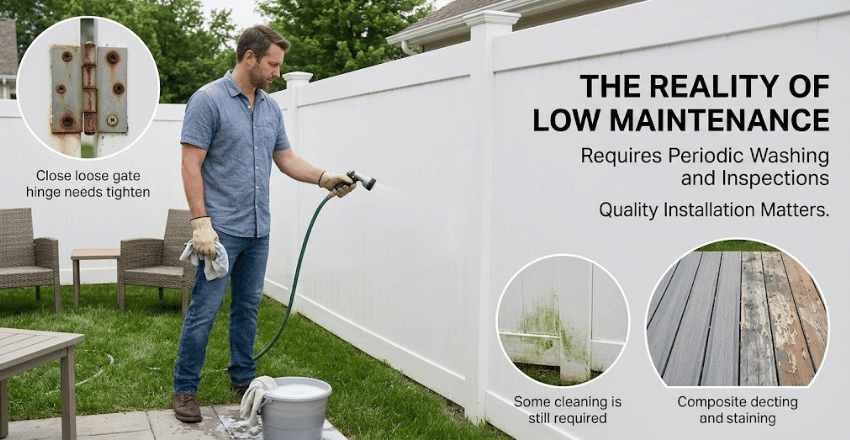
Low maintenance does not mean zero maintenance. Outdoor materials still collect soil, pollen, algae, lawn debris, and airborne contaminants. Gates and hardware can also loosen as an installation ages.
The difference is the type of work required. Vinyl, composite, and aluminum normally avoid routine painting, staining, and sealing. Periodic washing and inspection often handle most ordinary care.
Installation quality also affects future workload. Poor drainage, weak posts, undersized hardware, or badly aligned gates can create recurring problems. A durable material cannot compensate for a weak installation.
Which Low Maintenance Fence Material Is Best?
There is no single winner for every property. A privacy-focused backyard has different requirements from a pool enclosure or front-yard boundary. Comparing each material by purpose gives you a more useful answer, and fence ideas for every yard can help you picture the styles before you decide.
1. Vinyl: Best All-Around Choice for Easy-Care Privacy
Vinyl is one of the simplest options for homeowners who want solid privacy. It does not require regular staining or painting, and routine dirt normally washes away easily. Current U.S. pricing commonly falls between $15 and $40 per linear foot installed.
Solid panels can screen patios, neighboring properties, and backyard activity. Picket and semi-private styles give you more airflow and visibility. Color and texture choices have also expanded beyond traditional white panels.
Temperature and installation details still matter. Some vinyl products can become less forgiving during severe temperature extremes. Properly reinforced rails and well-set posts are especially important in exposed or windy locations.
Choose vinyl when you want privacy and predictable maintenance without paying for premium composite products. Compare warranties, panel thickness, reinforcement, and wind requirements before purchasing. Those details can matter more than color alone.
2. Composite: Best for a Wood-Like Look With Less Finishing
Composite fencing usually combines wood-derived material with plastic or polymer components. Many systems provide a warmer, more natural appearance than basic PVC panels. They generally avoid the recurring staining schedule associated with exposed timber.
Current 2026 estimates put many installed composite projects around $11 to $45 per linear foot. Taller privacy systems often land toward the upper end. Premium textures, decorative sections, and gates can increase the final price.
Composite can still collect dirt or biological growth. Darker colors may also show weathering differently from lighter finishes. Follow the manufacturer’s cleaning instructions rather than using harsh chemicals automatically.
This material makes sense when appearance matters nearly as much as upkeep. Renovixa’s hardwood decking guide explains a similar outdoor tradeoff between natural wood character and lower-care composite materials. That comparison can help when coordinating several backyard surfaces.
3. Aluminum: Best for Open Views and Corrosion Resistance
Aluminum fencing works well around landscaped yards, pools, and decorative front boundaries. Its open picket design maintains visibility instead of creating a solid visual barrier. Aluminum also resists rust, which reduces a common maintenance issue associated with some ferrous metals.
Professional installation commonly costs more than basic chain-link or entry-level vinyl. Angi currently places many aluminum projects around $22 to $72 per linear foot installed. Height, picket spacing, gates, and ornamental details can move prices considerably.
Aluminum does not provide meaningful privacy unless combined with another screening system. It can also dent after significant impact. Damaged coatings and loose hardware should be addressed before small problems spread.
Pool barriers need extra planning. Height, spacing, gate latching, and access rules vary by jurisdiction. Always confirm local building and pool-safety requirements before ordering a system.
4. Coated Chain-Link: Best for Budget-Friendly Containment
Chain-link remains practical when you need to enclose a large area without blocking sightlines. Galvanized or coated systems can provide years of service with modest routine care. They are commonly used for pets, side yards, utility areas, and larger properties.
Current national estimates range from roughly $8 to $40 per linear foot installed. Standard residential projects often fall below premium decorative systems. Height, wire gauge, mesh size, coating, and gates all affect price.
Privacy is the main compromise. Slats and screens can reduce visibility, but they add cost and increase wind resistance. A dedicated solid-panel material usually makes more sense when privacy is the main goal.
Inspect connections, tension, posts, and gates occasionally. Remove climbing plants before they become difficult to control. Minor corrections are easier before bent hardware or shifting posts affect larger sections.
5. Wood: Best When Natural Character Matters More Than Minimal Care
Wood remains popular because it offers warmth, customization, and strong privacy. Cedar and pressure-treated lumber can suit many residential designs. Boards can also be repaired, refinished, or recolored over time.
Those advantages come with more upkeep. Moisture, sunlight, insects, and temperature changes affect exposed timber differently across the United States. Cleaning, staining, sealing, and board repairs may become part of long-term ownership.
If you prefer timber, Renovixa’s guide on how to stain wood covers preparation, application, and surface protection. Proper finishing becomes especially important outdoors. Skipping preparation can shorten the useful life of an otherwise attractive installation.
Wood can still be the right decision when appearance outranks convenience. Choose it because you value authentic material and repairability. Do not choose it while expecting the same care schedule as vinyl or aluminum.
How Long Does Each Material Last?
Lifespan depends on product quality, installation, and climate, so treat these as rough planning ranges. Vinyl and composite commonly last about 20 to 30 years. Aluminum often lasts 25 years or more when the coating stays intact. Coated chain-link typically lasts 15 to 20 years, and wood often lasts 10 to 20 years depending on species and finishing.
A longer lifespan helps most when upkeep is realistic. A fence that is cleaned and inspected occasionally will usually outlast one that is ignored, whatever the material.
Maintenance and Cost Comparison
Purchase price tells only part of the ownership story. A cheaper material can require more cleaning, finishing, repair labor, or replacement parts later. A higher initial price may make sense when recurring maintenance matters more to you.
| Material | Painting or staining | Cleaning | Main maintenance concern | Privacy potential |
|---|---|---|---|---|
| Vinyl | No routine finishing | Occasional | Dirt, impact, alignment | Excellent |
| Composite | Usually not required | Occasional | Staining, fading, hardware | Excellent |
| Aluminum | Usually not required | Occasional | Dents, coating damage, gates | Limited |
| Coated chain-link | Usually not required | Occasional | Tension, coating, hardware | Limited |
| Wood | Often required | Regular | Moisture, finish, boards | Excellent |
Think about maintenance in hours as well as dollars. Some homeowners dislike staining more than washing. Others value a repairable natural material enough to accept scheduled finishing.
The surrounding yard matters too. Poor drainage can expose posts and lower sections to unnecessary moisture. If your property has grade changes, Renovixa’s retaining wall planning guide can help you consider drainage and soil movement together.
How Climate Changes the Best Choice
Hot, sunny regions can place extra stress on darker surfaces and some plastics. Ask manufacturers about temperature limits, ultraviolet exposure, and color warranties. Lighter colors can also absorb less solar heat than dark finishes.
Cold climates introduce freeze-thaw movement and impact concerns. Posts need installation methods suitable for local soil and frost conditions. Product instructions and local contractor experience are useful when winter conditions are severe.
Coastal properties create another challenge because salt and moisture can accelerate corrosion. Aluminum and suitably protected hardware can work well in those conditions. Fasteners and gate components deserve the same attention as panels.
Humidity also affects biological growth and timber decay risk. Easy washing becomes more valuable in warm, damp regions. Material selection should therefore reflect your local climate instead of national popularity alone.
What Should You Check Before Buying?
Start by deciding what the barrier must accomplish. Rank privacy, pet containment, security, appearance, budget, and maintenance in order. This prevents a stylish material from solving the wrong problem.
Next, compare complete systems instead of panel prices. Posts, concrete, fasteners, gates, removal, permits, and labor can change the project total significantly. Ask contractors to separate these costs on written quotes.
Review the property before digging starts. Confirm boundaries, easements, utilities, HOA rules, and local permit requirements. Changes become expensive after posts are already set.
Finally, compare warranty exclusions as carefully as warranty length. Coverage may differ for fading, wind, impact, labor, or improper installation. Keep product records and installation documents after completion.
A Simple Decision Guide
Choose vinyl when full privacy and easy cleaning are your leading priorities. It remains the strongest general-purpose choice for many suburban backyards. Its moderate cost also makes it easier to compare against wood.
Choose composite when you want a richer wood-inspired appearance with less recurring finishing. Budget more for premium products and decorative details. Check color and cleaning guidance before ordering.
Choose aluminum when you want an open decorative boundary or need to preserve views. It is also worth comparing around pool areas, subject to local safety rules. Powder-coated finishes can reduce routine surface work.
Choose coated chain-link when practical containment and cost matter more than privacy. It can cover larger areas economically. Upgraded coatings can improve appearance and weather resistance.
Choose wood when genuine timber remains part of the design goal. Renovixa’s exterior paint guide also explains how outdoor coatings respond to climate and exposure. That background can help when planning nearby trim, gates, or other exterior surfaces.
Frequently Asked Questions
What is the best low maintenance fence for most homes?
Vinyl is a strong general-purpose choice because it combines privacy, moderate pricing, and limited routine finishing. Composite can be better when wood-like appearance matters more than purchase price. Aluminum works better where visibility is desirable.
Which fencing material needs the least upkeep?
Vinyl, composite, and aluminum all rank near the top for easy ownership. They generally avoid the recurring staining or sealing associated with wood. Cleaning and periodic hardware inspections are still sensible.
Is vinyl or composite easier to maintain?
Both usually require modest routine care. Vinyl often needs little beyond washing, while composite products may have more specific stain-cleaning guidance. Always follow the manufacturer’s instructions for the exact product.
What is the cheapest easy-care option?
Chain-link frequently has the lowest installed starting cost among conventional residential choices. Current 2026 pricing often starts below vinyl, composite, and ornamental aluminum. Privacy upgrades can narrow that price advantage.
How often should easy-care fencing be cleaned?
There is no universal cleaning schedule. Wash surfaces when dirt, pollen, algae, or other buildup becomes visible. Climate, nearby trees, irrigation, and road exposure can change how often cleaning is needed.
Is any fencing completely maintenance-free?
No outdoor system is truly maintenance-free. Gates, posts, fasteners, finishes, and surrounding soil still need occasional inspection. Choosing durable materials reduces chores, but it does not eliminate ownership responsibilities.
Choose for the Work You Want to Avoid
The smartest choice starts with the chores you do not want to repeat. If staining is the problem, vinyl or composite deserves close attention. If rust concerns you, aluminum can be a stronger fit.
Your property conditions still determine the final decision. Compare climate, purpose, local codes, installation details, and complete project prices before ordering materials. A well-installed system should reduce maintenance without compromising the function you needed in the first place.
—–