A pool plaster finish creates the smooth, watertight interior surface found in many concrete and gunite swimming pools. Standard white plaster remains popular because it offers a clean appearance at a relatively accessible price. Yet homeowners also have quartz and pebble-based alternatives that can provide longer service life.
For U.S. homeowners, the right finish depends on budget, desired texture, local labor rates, and maintenance expectations. Standard plaster generally costs less upfront than quartz or pebble finishes. Careful water chemistry and proper startup procedures can also affect how the finished surface ages.
Direct answer: Pool plaster is a cement-based interior finish applied over a concrete or gunite swimming pool shell. Standard plaster is usually the least expensive resurfacing option. Current U.S. estimates often place replastering in the several-thousand-dollar range. Quartz and pebble finishes cost more but can offer greater durability.
Pool Finish at a Glance
| Question | Practical answer |
|---|---|
| What is it? | A cement-based finish that covers a concrete or gunite pool shell |
| Common types | Standard white plaster, colored plaster, quartz aggregate, pebble aggregate |
| Typical standard-plaster lifespan | Roughly 7–12 years under many residential conditions |
| Common replacement signs | Roughness, flaking, persistent stains, exposed substrate, or widespread deterioration |
| Typical U.S. cost | Often several thousand dollars, depending on size, preparation, region, and finish |
| Lowest-cost common choice | Standard white plaster |
| Longer-lasting upgrades | Quartz and pebble-based finishes |
| DIY-friendly? | Small patches may be possible, but full resurfacing is usually professional work |
Key Takeaways
- Standard plaster offers a smooth finish and usually has the lowest upfront resurfacing cost.
- Quartz adds aggregate for greater durability and more visual texture.
- Pebble finishes usually cost more but often provide longer service life.
- Roughness, flaking, staining, and widespread surface failure can signal resurfacing is due.
- Preparation can affect price almost as much as the finish itself.
- Water chemistry matters throughout the life of a cement-based pool surface.
- Compare contractor quotes by scope, not by total price alone.
What Is Pool Plaster?
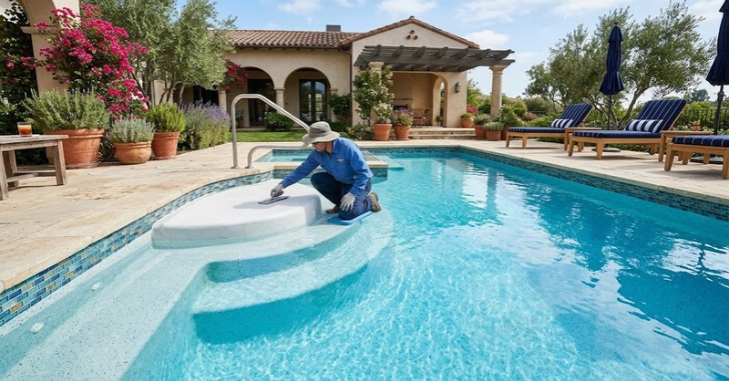
Traditional swimming-pool plaster usually combines white Portland cement with marble aggregate and water. Crews apply the mixture over a prepared concrete or gunite shell. The finished layer creates the surface swimmers touch while protecting the structural shell beneath it.
White plaster produces the familiar light-blue water appearance seen in many residential pools. Pigments can create darker blue, gray, or other tones. Aggregate additions can change both appearance and surface durability.
Plaster differs from a vinyl liner or factory-applied fiberglass surface. It is primarily associated with concrete and gunite swimming pools. Vinyl pools use replaceable liners, while fiberglass pools rely on different surface systems.
How Much Does Pool Plaster Cost in the U.S.?
Homeowners should treat national pricing as a planning range rather than a guaranteed quote. Current cost guides commonly place standard replastering in the several-thousand-dollar range. Published estimates typically run from a few thousand dollars to roughly $8,000 for standard replastering on a mid-sized residential pool, with wide regional variation.
Some guides list lower figures, often starting around $2,500 for smaller or simpler jobs. That difference shows why one national average can be misleading. Pool size, geographic market, access, demolition, repairs, and finish specifications can move the price considerably.
A contractor may also uncover damaged areas after draining and preparing the shell. Extra crack repair, tile work, coping repair, or bond-beam work can raise the final bill. Ask each bidder to separate those items from the base resurfacing price.
Typical Finish Cost Comparison
| Finish | Approximate planning range | Relative durability | Surface feel |
|---|---|---|---|
| Standard plaster | Lowest common resurfacing cost | Moderate | Smooth |
| Quartz plaster | Higher than standard plaster | Moderate to long | Smooth to lightly textured |
| Pebble aggregate | Higher upfront cost | Long | Textured |
| Full tile | Highest in many projects | Very long | Depends on tile |
Cost guides typically show standard plaster at roughly 6–8 per square foot and quartz at roughly 7–10. Pebble estimates often run about 7–15 per square foot. Local proposals may differ substantially from those national planning figures.
How Long Does a Plaster Pool Finish Last?
Standard plaster commonly lasts about seven to twelve years according to several consumer cost guides, and regional guidance usually reports a similar range.
Actual service life depends on far more than age alone. Water balance, surface quality, startup procedures, climate, maintenance, and workmanship all matter. A well-maintained surface may reach the upper end of its expected range.
Quartz and pebble products may provide longer useful lives. Current guides commonly place quartz around ten to fifteen years or more. Pebble surfaces are often estimated around fifteen to twenty years or longer.
Pool Plaster vs. Quartz vs. Pebble
Standard plaster works well when upfront price and a smooth surface matter most. It provides a classic appearance and is familiar to most pool contractors. Its main tradeoff is a shorter expected lifespan than many upgraded aggregate finishes.
Quartz mixes hard mineral aggregate into a cement-based finish. The added material can improve stain resistance and durability. It also creates more color and visual variation than basic white plaster.
Pebble surfaces contain exposed stone aggregate and usually feel more textured. They often carry the highest price among these three common options. Their longer expected life can make the added upfront cost reasonable for long-term owners.
| Factor | Standard Plaster | Quartz | Pebble |
|---|---|---|---|
| Upfront price | Lower | Medium | Higher |
| Texture | Smooth | Smooth to lightly textured | Textured |
| Color choices | Good | Very good | Very good |
| Typical lifespan | About 7–12 years | About 10–15+ years | About 15–20+ years |
| Best fit | Lower initial budget | Balance of price and durability | Long-term durability |
If you are improving the wider pool area, material choices around the water also deserve attention. Renovixa’s hardwood decking guide explains outdoor wood options, maintenance, and drainage considerations. Those factors can help when a resurfacing project becomes a broader backyard renovation.
Signs Your Pool May Need Replastering
Age alone should not determine when you resurface. A pool can develop surface problems earlier because of chemistry problems or defective application. Another pool may remain serviceable beyond a typical lifespan estimate.
Common warning signs include the following.
- Increasingly rough walls or floors
- Plaster that flakes, peels, or delaminates
- Persistent discoloration that cleaning does not remove
- Visible chips or worn-through areas
- Widespread etching or pitting
- Frequent surface repairs across several areas
A rough finish can become uncomfortable on swimmers’ feet and hands. More severe deterioration can expose material beneath the finish. Industry guidance notes that cracks and spalling should be repaired before applying a new surface.
Not every crack indicates the same underlying problem. Structural movement needs a different response from superficial surface deterioration. Renovixa’s concrete foundation repair guide explains why concrete symptoms should be diagnosed before selecting a repair method.
What Happens During Pool Replastering?
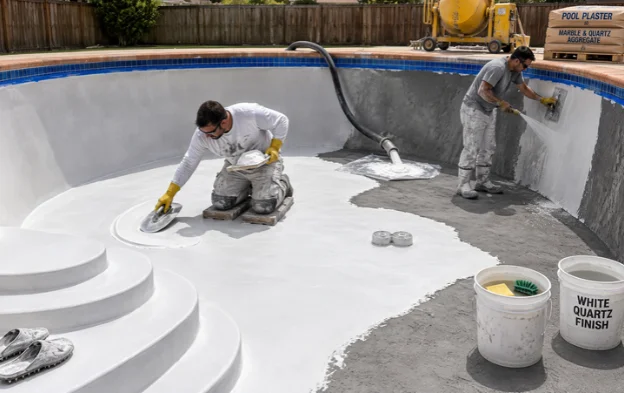
A professional resurfacing project begins by draining the pool and inspecting the existing interior. The crew then prepares the old surface so the new material can bond correctly. Preparation may involve chipping, blasting, grinding, or another approved method.
Damaged areas are repaired before the finish goes on. Contractors may also address fittings, tile edges, or other details while the vessel is empty. Preparation quality matters because a new finish cannot correct every problem beneath it.
The crew then mixes and applies the selected finish across the walls and floor. Skilled applicators work continuously to create an even surface before the material sets. After finishing, the pool is refilled according to the contractor’s startup procedure.
Fresh cement-based surfaces also require controlled water chemistry during startup. Owners usually need frequent brushing and careful chemical monitoring during this period. Follow the finish manufacturer and installer instructions instead of relying on a generic schedule.
What Makes a Replastering Quote More Expensive?
Pool size is one of the clearest cost drivers because more surface area requires more material and labor. Yet square footage is only part of the calculation. Site access and existing surface condition can be equally important.
Prices may rise because of the following factors.
- Extensive chipping or surface removal
- Crack or shell repairs
- Difficult backyard access
- New waterline tile
- Coping replacement
- Premium pigments or aggregates
- Steps, benches, spas, and complex shapes
- Regional labor costs
- Water refill and startup services
Ask contractors to describe the preparation method in writing. Two bids with similar totals may include completely different amounts of repair and preparation. Comparing the detailed scope helps reveal which proposal offers better value.
Moisture and concrete problems elsewhere around a property also need the correct diagnosis. Renovixa’s moisture barrier guide explains why moisture-control products solve different types of water movement. That same problem-first mindset is useful when investigating cracks or deterioration around a pool area.
Can You Replaster a Pool Yourself?
Small cosmetic patches can fall within the abilities of experienced DIY homeowners. Full-pool resurfacing is a different project because the material has a limited working time. Surface preparation, mixing, application, and startup all influence the final result.
Many DIY plaster products are designed for smaller repairs rather than complete resurfacing. Full application also demands specialized preparation and coordinated labor.
Hiring a qualified resurfacing contractor reduces several execution risks. Ask about licensing requirements in your state and confirm appropriate insurance. Request references for recent projects using the same finish you are considering.
How to Compare Pool Resurfacing Contractors
Start by requesting an itemized written proposal rather than comparing headline prices. The quote should identify the finish product, preparation method, repair allowances, and startup responsibilities. It should also state which work is excluded.
Compare at least these details in every proposal.
- Exact finish manufacturer and product
- Surface-preparation method
- Included crack or patch repairs
- Tile and coping scope
- Number of finish coats or application specification
- Startup and water-balancing responsibilities
- Workmanship warranty
- Manufacturer warranty requirements
- Cleanup and debris removal
- Payment schedule
A low proposal can become expensive when essential preparation appears later as an extra. A higher proposal may already include necessary repairs and startup work. Compare identical scopes before deciding which contractor is cheaper.
Maintaining a New Plaster Finish
Balanced pool water helps protect a cement-based finish from scaling, staining, and aggressive water conditions. Test water on the schedule recommended by your pool professional or chemical system. Correct problems gradually and follow product instructions.
Regular brushing also helps during the early startup period. Afterward, routine cleaning keeps dirt and developing deposits from remaining on the surface. Avoid aggressive tools that can scratch or damage the finish.
Keep records of water tests, major chemical adjustments, and visible surface changes. Those notes can help identify whether a problem is isolated or developing across the pool. They can also help when discussing warranty concerns with an installer.
When Is Standard Plaster the Right Choice?
Standard plaster makes sense when you want a smooth traditional finish at the lowest common resurfacing price. It can also suit homeowners who do not expect to keep the property for decades. The familiar material means finding experienced installers is usually straightforward.
Quartz can be worth considering when you want more durability without moving to a strongly textured pebble finish. Pebble may suit owners prioritizing longer service life over the lowest initial price. Your best option should match your budget, preferred feel, and expected ownership period.
Before signing a contract, obtain multiple itemized local estimates. Ask every bidder to quote the same finish specification and preparation scope. That approach gives you a much more useful comparison than national averages alone.
Choose the Finish Around Your Budget and Ownership Plans
A resurfacing decision should balance current condition, upfront price, texture, and expected lifespan. Standard plaster remains a practical choice for homeowners seeking a smooth finish and lower initial cost. Quartz and pebble options can justify their higher price when longer service life matters.
Get several local estimates and require contractors to describe preparation in detail. Compare the same material specification across each proposal. Then choose the system that fits both your pool and your long-term renovation plans.
Is pool replastering worth it?
Replastering can be worthwhile when a concrete pool remains structurally sound but its interior finish has deteriorated. It renews the swimming surface without replacing the entire pool shell. The finish choice can also update water color and appearance.
The decision becomes less straightforward when major structural or plumbing problems exist. Those repairs should be identified before spending heavily on a cosmetic surface. A complete inspection helps define the correct project scope.
Frequently Asked Questions
How much does pool plaster cost?
Current U.S. estimates vary because pools differ in size, region, access, and condition. Standard replastering often falls within a several-thousand-dollar range. Published ranges typically reach roughly $6,000 to $8,000 for a mid-sized standard-plaster project, though local quotes vary.
Your contractor may charge more if the shell needs extensive preparation or repair. Tile, coping, premium colors, and complex pool shapes can also increase the price. Request an itemized local quote before setting a final budget.
How often should a plaster pool be resurfaced?
Standard finishes are often estimated to last about seven to twelve years. Maintenance and water chemistry can shorten or extend that service period.
Do not resurface solely because the pool reaches a certain age. Look for persistent roughness, flaking, pitting, widespread staining, or other physical deterioration. A professional inspection can help distinguish cosmetic wear from deeper problems.
Is plaster cheaper than pebble?
Standard plaster generally costs less upfront than pebble aggregate. Current guides often show pebble costing several dollars more per square foot.
Pebble can provide longer service life, so upfront cost tells only part of the story. Divide local installed quotes by the expected service period for another useful comparison. Also consider texture because pebble feels different underfoot.
Can you plaster over old plaster?
A new finish may sometimes be applied after proper preparation of a sound existing surface. Loose, failing, or poorly bonded material must be addressed first. The chosen preparation method depends on the condition of the existing finish.
Contractors may chip, grind, blast, or otherwise prepare the substrate. The goal is to create a stable bonding surface. Ask your installer which preparation method is included in the proposal.