
For an established lawn, a practical starting point for how long you should water your lawn is 20 to 30 minutes per zone, about twice a week. But minutes are only a starting estimate. Calibrate your sprinkler to deliver roughly 1 inch of water per week, including rainfall, then adjust for soil, weather, and grass condition.
Newly seeded grass needs a different approach. It requires lighter, more frequent moisture at first, while an established yard benefits from deeper and less frequent irrigation. Understanding How Long Should You Water Your Lawn helps you adjust the watering schedule according to grass age, soil conditions, and moisture needs.
| How Long Should You Water Your Lawn | Practical starting point |
| Established grass | About 1 inch of total moisture per week, including rain |
| Typical sprinkler schedule | Roughly 20 to 30 minutes per zone, twice weekly, then calibrate |
| Ideal time | Early morning, generally before the day becomes hot |
| Heavy clay soil | Shorter cycles with soaking time between them |
| Fast-draining sandy soil | Check moisture sooner and adjust frequency if needed. |
| New seed | Light, frequent watering until roots and seedlings become established |
The Environmental Protection Agency says yards commonly need about 1 inch of water per week, though local conditions change that figure. Cornell also recommends roughly 1 inch in one or two applications, including rainfall.
How Long Should You Water Your Lawn? Use Inches, Not the Clock
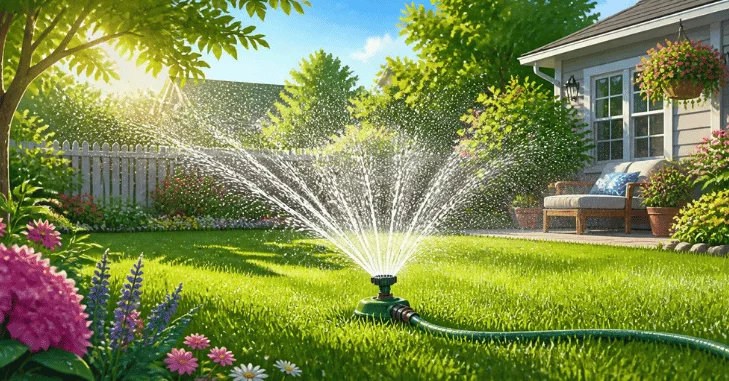
A sprinkler timer tells you how long the system ran. It does not tell you how much moisture reached the soil. Two systems can run for 30 minutes and deliver different amounts. Water pressure, nozzle type, sprinkler spacing, wind, and coverage all affect output. That is why current lawn-care guidance focuses on measuring irrigation rather than trusting a fixed number of minutes.
For many established yards, 20 to 30 minutes per zone twice a week is a useful starting point. LawnStarter currently recommends about 25 to 30 minutes per session, twice weekly, for a typical yard. Bob Vila gives a broader range because equipment and conditions vary.
Your goal is to find the runtime that works with your own sprinkler system.
Measure Your Sprinkler Output With a Catch-Can Test
You can calibrate irrigation with several straight-sided containers. LawnStarter and EPA WaterSense both recommend measuring sprinkler output rather than guessing from runtime.
- Place several identical shallow containers across the watering zone.
- Run the sprinkler for a set period, such as 15 or 20 minutes.
- Measure the depth collected in each container.
- Add the measurements and divide by the number of containers.
- Use that average to calculate how long the zone needs to reach your target.
Here is a simple example. Suppose your containers average 0.25 inches after 15 minutes. At a similar output rate, about 30 minutes would supply 0.5 inch.
Two sessions at that rate would provide about 1 inch for the week before rainfall is counted.
That calculation gives you a schedule based on your equipment rather than somebody else’s sprinkler.
How Often Should You Irrigate Established Grass?
Deep, less frequent irrigation usually makes more sense than a small amount every day.
Cornell recommends supplying the weekly requirement in one or two applications. Southern Living also advises against routine daily irrigation for established turf.
A simple starting schedule is
- Water twice per week.
- Aim for roughly 0.5 inch each session.
- Subtract useful rainfall from the weekly total.
- Adjust when the soil stays wet or dries unusually fast.
Daily watering can keep moisture near the surface instead of encouraging deeper rooting. An exception is new seed, which needs frequent surface moisture while germinating.
Early Morning Is the Most Practical Watering Window
Schedule irrigation in the early morning when possible. Cornell recommends roughly 4 to 8 a.m., while other current lawn-care guidance extends the useful morning window closer to 9 or 10 a.m. The common point is to irrigate before strong daytime heat increases evaporation.
Late-evening irrigation can leave turf wet for a long period. Morning watering gives the soil time to absorb moisture while the grass surface can dry as the day warms. If your controller allows scheduled starts, morning irrigation also makes consistency easier.
Adjust the Schedule for Soil, Rain, and Weather

A fixed weekly timer can waste water because conditions keep changing.
Clay soil
Clay absorbs moisture slowly. Long sprinkler runs may create puddles or runoff before enough water reaches the root zone. Scotts recommends a cycle-and-soak approach when runoff appears. Split the total runtime into shorter cycles and allow absorption time between them. If water regularly sits on compacted ground, irrigation may not be the only issue. Renovixa’s guide to choosing and using a lawn aerator explains how aeration can help address compacted soil.
Sandy soil
Sandy ground drains faster than clay. Check the root zone between irrigation days instead of assuming one schedule works for every soil. Soil type is one reason published runtime recommendations vary.
Rain and heat
Rain counts toward the weekly moisture target. Skip or shorten irrigation after useful rainfall rather than running the controller automatically. EPA WaterSense recommends adjusting watering as weather changes. Hot, dry conditions can increase demand. Check soil moisture and turf condition before adding more watering days.
Know the Signs of Too Much or Too Little Water
Your grass can help confirm whether the schedule is working. Common signs of excess moisture include persistent puddles, soft or soggy ground, fungal growth, and grass that remains wet for long periods. The Spruce also identifies yellowing and a spongy surface among possible overwatering signals.
Dry turf behaves differently. Grass may lose its spring, hold footprints longer, or develop dry and brown areas. Check the soil before changing the timer. A dry surface does not always mean the root zone is dry.
New Grass Needs a Different Watering Schedule
Fresh seed should not follow the same schedule as mature turf. Scotts recommends keeping the upper soil moist during germination. Once new grass reaches roughly 3 inches tall, watering can shift toward less frequent sessions that moisten a deeper root zone.
The exact frequency depends on heat, wind, rainfall, soil, and seed type. The main goal early on is to prevent the seedbed from drying out without creating standing water. Once the grass establishes stronger roots, transition toward the deeper schedule used for the rest of the yard.
A Simple Weekly Routine That Prevents Guesswork

Check rainfall first. Then inspect the soil and run your calibrated sprinkler only when the yard still needs moisture. A practical routine is to measure sprinkler output once, record the correct runtime, and revisit the test after changing heads or water pressure. Seasonal weather changes may also require an adjustment.
Conclusion
The right lawn-watering schedule depends on more than a timer setting. For established grass, start with about 1 inch of total water per week, including rainfall, and use a catch-can test to determine How Long Should You Water Your Lawn for the right amount of moisture.
Watering in the early morning, adjusting for soil type and weather, and using shorter cycles on compacted or clay soil can reduce runoff and encourage healthier roots. New grass requires more frequent moisture until it becomes established. The best schedule is one based on measured sprinkler output and the actual condition of your lawn.
Want to know about The Complete Guide to Lawn Aerator: Benefits, Types, Usage Techniques, Maintenance Tips, Seasonal Lawn Care Strategies, and Soil Improvement Practices? Check out our Gardening category.
Set the Timer From a Measurement, Not a Guess
Start with about 20 to 30 minutes per zone, then perform a catch-can test. Once you know how quickly your sprinklers deliver 0.5 inch, you can build a schedule around measured output. Count rainfall, watch for runoff, and adjust for seasonal conditions. That small calibration step can prevent both chronically dry grass and unnecessary irrigation.
Frequently Asked Questions
For many established lawns, 20 to 30 minutes per zone is a reasonable starting estimate. Measure sprinkler output to confirm it. The better target is roughly 0.5 inch per session when watering twice weekly, adjusted for rainfall and local conditions.
It can be. If your sprinkler delivers the required amount in 20 minutes, running it longer would add unnecessary water. A catch-can test shows how much the system delivers in that period.
Established turf generally should not need routine daily irrigation. Start with deeper, less frequent watering and adjust for heat, soil moisture, rainfall, and local restrictions. Freshly seeded areas are an exception because the surface must stay moist during germination.
Morning is the preferred window in the guidance reviewed. Watering before daytime heat reduces evaporation, while the grass surface has time to dry afterward.
About 1 inch per week, including rainfall, is a widely used starting target. Local climate, soil, grass species, shade, and weather can shift the amount your yard needs