The main exterior door weatherstripping types are compression seals (kerf-in or stop-mounted bulbs) for the sides and top, V-strip tension seals, adhesive foam tape, magnetic seals on steel doors, and door sweeps or door shoes paired with an adjustable threshold at the bottom. For most modern pre-hung steel or fiberglass doors, the best fix is a replacement kerf-in compression seal on the jamb plus a matching door bottom. For older wood doors, V-strip or a stop-mounted compression seal usually works better. You might also like Door Weather Stripping.
The right choice depends on the size and shape of the gap, the door material, how often the door is used and your climate. This guide compares each type and material, shows how to find leaks, walks through replacement step by step and covers the mistakes that stop a new seal from working.
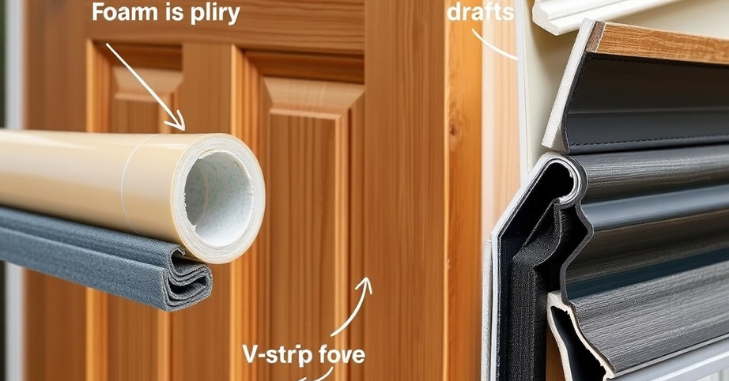
Exterior door weatherstripping types at a glance
| Type | Where it goes | Best for | Typical lifespan |
|---|---|---|---|
| Kerf-in compression seal | Slot in the jamb or stop | Pre-hung steel and fiberglass doors | Several years |
| Stop-mounted compression strip | Nailed or screwed to the door stop | Wood doors without a kerf slot | Several years |
| V-strip (tension seal) | Inside the jamb, sides and top | Older wood doors, even gaps | Several years |
| Adhesive foam tape | Door stop or jamb | Small, uneven gaps, quick fixes | Often one or two seasons |
| Magnetic seal | Jamb, against steel door face | Steel doors, very tight seal | Long lasting |
| Door sweep | Face of the door bottom | Gaps under the door | A few years |
| Door shoe or bottom seal | Wraps the bottom edge | Steel and fiberglass doors | A few years |
| Adjustable threshold | Floor under the door | Fine-tuning the bottom gap | Long, with insert replacements |
Why exterior door weatherstripping matters
Doors open and close thousands of times a year, and their seals wear, flatten and crack. Even a narrow gap around an entry door adds up to a meaningful opening when you total its length, and air leaks around doors and windows are a common target in home energy audits. The U.S. Department of Energy’s Energy Saver guidance treats air sealing and weatherstripping as one of the most cost-effective upgrades a homeowner can make.
Good seals do more than save energy. They keep out wind-driven rain, insects, dust and road noise, stop doors rattling in the wind, and make rooms near the entry noticeably more comfortable in winter and summer.
Weatherstripping materials compared
| Material | Strengths | Weaknesses | Good climates |
|---|---|---|---|
| EPDM rubber | Flexible in cold, durable, good memory | Can cost more than vinyl | Cold and mixed climates |
| Silicone | Stays soft in extreme heat and cold, UV resistant | Higher cost | Hot sun, big temperature swings |
| Vinyl | Affordable, moisture resistant | Stiffens in cold, can crack over time | Mild climates |
| Open or closed-cell foam | Cheap, easy to install | Compresses and wears quickly | Low-traffic doors, temporary fixes |
| Felt | Very cheap | Absorbs water, wears fast | Rarely a good choice outdoors |
| Metal (bronze, aluminum) | Very long life, used in V-strip | Harder to install, can squeak | Historic wood doors |
As a rule, pay for EPDM or silicone on any door you use daily. The material cost difference is small compared with the time spent replacing a cheap seal every year.

Weatherstripping types in detail
Kerf-in compression seals
Most pre-hung exterior doors sold in the U.S. have a thin slot, called a kerf, cut into the jamb or door stop. The original foam-filled or bulb-style seal presses into that slot with a barbed edge. Replacing it is usually a tool-free job: pull out the old strip, clean the slot and press in a new one of the same profile. Take a short piece of the old seal to the store to match it, because profiles and barb sizes vary between door makers.
Stop-mounted compression strips
If your door has no kerf, you can nail or screw a wood or aluminum strip with an attached rubber or silicone bulb to the face of the door stop, set so the bulb compresses slightly against the closed door. Slotted screw holes let you fine-tune the position. These are forgiving on doors that are a little out of square and are a good upgrade for older wood doors.
V-strip or tension seals
A V-strip is a folded strip of vinyl or metal installed inside the jamb. When the door closes, the V compresses and springs back to fill the gap. It is nearly invisible and works well on wood doors, but it needs a clean, flat surface and careful fitting at the corners so it does not bunch up.

Door sweeps, door shoes and thresholds
The bottom of the door is usually the leakiest spot. A door sweep screws onto the inside face of the door and drags a rubber, vinyl or brush fin across the threshold. A door shoe wraps the bottom edge of the door and often has drip edges that shed water outward. An adjustable threshold has screws that raise or lower the center insert so the bottom seal just touches it. Combining a good door bottom with a properly adjusted threshold is the most effective way to stop drafts and water at floor level.
Brush sweeps handle uneven floors and tile thresholds better than solid rubber fins, while solid fins seal more tightly on a smooth, level threshold.
Magnetic weatherstripping
Magnetic seals work like refrigerator gaskets, pulling tight against a steel door. They are common on insulated steel entry doors and give an excellent seal, but they only work with a steel door face.
Foam tape
Adhesive foam tape is the quickest fix and suits small or uneven gaps, but it compresses permanently with use and the adhesive can fail in cold weather. Treat it as a stopgap on busy doors, or use it on a rarely opened door where it will see little wear.

How to choose the right weatherstripping
Work through these questions in order:
- Is there a kerf slot? If yes, buy a matching kerf-in seal. This covers most modern pre-hung doors.
- What is the door made of? Steel doors can use magnetic seals; wood doors suit V-strip or stop-mounted bulbs.
- How big and even is the gap? Even, narrow gaps suit V-strip; wider or tapering gaps need a bulb seal that can compress across a range.
- How busy is the door? High-traffic doors need EPDM or silicone compression seals, not foam or felt.
- What is the climate? Cold winters favor EPDM or silicone; hot sun calls for UV-resistant silicone; rainy and coastal areas need a door shoe with a drip edge.
- What is happening at the bottom? Light under the door means the sweep, shoe or threshold needs attention, regardless of the side seals.
How to find door air leaks
- Daylight test: close the door in a dark room on a bright day and look for light around the edges.
- Paper test: close the door on a strip of paper at several points. If it slides out with no resistance, the seal is not making contact there.
- Smoke test: on a windy day, hold a lit incense stick near the edges and watch for the smoke to waver. Keep flames away from curtains.
- Feel test: run the back of your hand along the edges on a cold day.
Mark each leak point with painter’s tape so you can recheck the same spots after the repair.
Tools and materials checklist
- Tape measure and pencil
- Replacement seals for the sides and head, plus a door sweep or shoe
- Utility knife or sharp scissors, and tin snips for metal-backed strips
- Putty knife or plastic scraper for old adhesive
- Mild soapy water or rubbing alcohol and a clean cloth
- Screwdriver or drill, plus longer hinge screws if the door sags
- Small roller or J-roller for pressing in kerf seals
How to replace exterior door weatherstripping
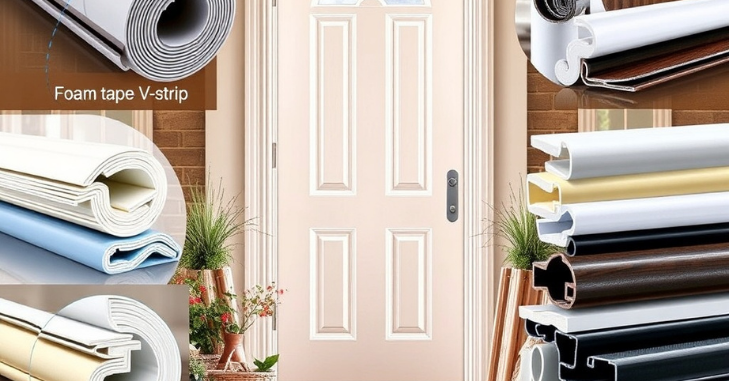
- Measure the gap. Note whether it is even or tapers, and measure the length of each side and the top.
- Identify what you have. Check for a kerf slot, a magnetic strip or a nailed-on seal, and look at the door bottom.
- Remove old material. Pull kerf seals straight out, scrape off adhesive residue and clean the surface with mild soapy water or rubbing alcohol. Let it dry.
- Cut to length. Cut the head (top) piece first and fit it snug between the side jambs, then cut the side pieces to meet it. Cut side seals so they reach the threshold.
- Install. Press kerf seals in with a roller or your fingers, working from top to bottom. For stop-mounted seals, fasten them so the bulb just compresses when the door is shut.
- Replace the door bottom. Remove the door from its hinges if needed to slide on a new door shoe, or screw a new sweep to the inside face.
- Adjust the threshold. Turn the adjustment screws until the seal touches evenly without making the door hard to close.
- Test. The door should latch without forcing. Repeat the paper and daylight tests at the points you marked.
If the door still will not seal, check the hinges and strike plate. Loose hinge screws or a sagging door create gaps no weatherstripping can close. Replacing a short hinge screw with a longer one that reaches the framing often pulls the door back into line. Moving the strike plate slightly can also bring the door tighter against the seal.

Common mistakes to avoid
- Buying the wrong kerf profile. Always match a sample of the old seal; a near match will leak or fall out.
- Using a seal that is too thick. If the door has to be slammed to latch, the seal will tear and the latch will wear.
- Skipping the corners. Gaps where the head and side seals meet are a common leak point. Corner pads help on many pre-hung doors.
- Ignoring the bottom. New side seals do little if air and water still come under the door.
- Applying adhesive strips to a dirty or cold surface. Clean and dry the area, and install on a mild day where possible.
Matching weatherstripping to your climate and door
Cold climates reward EPDM rubber or silicone, which stay flexible below freezing. Hot, sunny climates call for UV-resistant silicone and vinyl rated for exterior exposure. Coastal and rainy areas need materials that do not absorb water, plus a door shoe with a drip edge. High-traffic doors, such as the one to the garage or backyard, should get compression or magnetic seals rather than foam.
Sealing the door is one part of a tighter building envelope. The house wrap behind your siding and the foam or caulk around framing gaps do the same job on the walls, and our guide to closed-cell spray foam covers sealing larger gaps such as rim joists.
Cost and durability

Weatherstripping is one of the cheaper home efficiency upgrades. Foam tape and basic vinyl kits are low cost, while silicone, magnetic and heavy-duty door shoe kits cost more, and exact prices vary by brand and retailer. Paying more for durable materials usually makes sense on busy doors because you replace them less often. If you hire a handyman, the job is often quick, though fixing a sagging door or replacing a rotted threshold adds time and cost.
Signs it is time to replace the weatherstripping
- Cracked, torn, brittle or flattened strips
- Light or drafts visible around the door
- Water on the floor after wind-driven rain
- Rattling when the door is closed or the wind blows
- Insects getting in under the door
- Higher heating or cooling bills without another explanation
Check your door seals each fall before the heating season, alongside other openings such as basement windows. If you are adding a new basement opening, our egress window installation guide covers sealing and flashing it properly.

Bottom Line
Match the seal to the door: kerf-in EPDM or silicone for modern pre-hung doors, V-strip or stop-mounted bulbs for older wood doors, and always a good sweep or door shoe with an adjusted threshold at the bottom. Find leaks with the paper and daylight tests, fix sagging hinges before blaming the seal, and inspect everything each fall. Done right, it is an inexpensive afternoon job that pays back in comfort every season.
FAQs
What is the best weatherstripping for an exterior door?
For most steel and fiberglass entry doors, a kerf-in silicone or EPDM compression seal plus a door shoe and adjustable threshold works best. For older wood doors, V-strip or stop-mounted compression seals are usually the better fit.
How long does exterior door weatherstripping last?
Foam tape may last only a season or two on a busy door. Quality rubber, silicone and vinyl seals often last several years. Inspect them every fall and replace any that are cracked or flattened.
How do I know which kerf seal to buy?
Pull out a short section of the existing seal and match its profile and barb size at a hardware store. You can also check the door manufacturer’s replacement parts.
Should weatherstripping make the door hard to close?
No. The seal should compress lightly and the door should latch without forcing. If it is hard to close, the seal is too thick or the door or strike plate needs adjustment.
Can weatherstripping stop water under the door?
It helps, especially a door shoe with a drip edge and a properly adjusted threshold. Persistent leaks can also point to missing sill flashing or a threshold that slopes the wrong way and needs repair.
Can I install exterior door weatherstripping myself?
Yes. Replacing kerf-in seals and a door sweep is a straightforward DIY job with basic tools. Call a pro if the door is badly out of square, the threshold is rotted or water is getting into the subfloor.