The best fireplace ideas for a cozy living room work four levers: the surround material (stone, brick, tile, plaster or wood), the mantel and what sits on it, the lighting and seating around the hearth, and the fire source itself (wood, gas or electric). Change one lever well and the whole room feels warmer; change two or three and the fireplace becomes the room’s focal point. More from us: Fence Ideas for Every Yard.
Below are 10 practical ideas, from weekend updates like restyling the mantel or limewashing brick to bigger projects like a floor-to-ceiling tile surround or a double-sided unit. Each one includes notes on effort, relative cost and the safety clearances that matter before you change anything near a firebox.

Fireplace Ideas at a Glance
| Idea | Effort | Relative cost | Works with |
|---|---|---|---|
| Layered seasonal mantel | Easy | Low | Any fireplace |
| Stone or stone veneer surround | Pro or skilled DIY | Medium to high | Wood, gas, electric |
| Built-in shelving | Carpenter | Medium to high | Any |
| Electric fireplace or insert | Easy to moderate | Low to medium | Rooms without a chimney |
| Gallery wall above the mantel | Easy | Low | Any |
| Double-sided fireplace | Pro | High | New builds, major remodels |
| Tile surround | Moderate to pro | Medium | Any |
| Cozy seating and textiles | Easy | Low to medium | Any |
| Minimalist linear design | Pro | Medium to high | Gas, electric |
| Warm lighting and candles | Easy | Low | Any |
Safety First: Clearances and Code Basics
Before choosing materials or decor, know what can sit near a working fireplace. In the U.S., most local codes follow the International Residential Code and NFPA 211 for wood-burning masonry fireplaces. Common rules include keeping combustible materials such as a wood mantel at least 6 inches from the firebox opening, with more clearance required the farther a mantel projects, and a noncombustible hearth extension of at least 16 inches in front of the opening and 8 inches to each side (larger for bigger openings).
Factory-built, gas and electric units have their own clearances in the manufacturer’s installation manual, and those instructions take priority over general rules. Local codes can also differ, so confirm with your building department or a certified chimney professional before a remodel, and have a wood-burning chimney inspected before you invest in a new surround. A quick pre-project checklist:
- Find the make and model of a factory-built or gas unit and download its manual.
- Measure from the firebox opening to where the mantel, shelves or TV will sit.
- Confirm the hearth extension size and that it is noncombustible.
- Test smoke and carbon monoxide alarms on the same floor.
- Book a chimney inspection if the fireplace has not been used in years.
1. Layered Mantel Decor for Every Season
A styled mantel is the fastest way to make a fireplace feel intentional. Build it in layers: one large anchor piece (a mirror or artwork leaning against the wall), medium items at different heights (vases, candlesticks, a small stack of books) and something organic like greenery or dried stems. Keep the arrangement slightly asymmetrical so it looks relaxed rather than staged.
Then swap only the organic layer by season: eucalyptus and tulips in spring, shells or driftwood in summer, small pumpkins and dried grasses in fall, and garlands with warm fairy lights in winter. Because the anchor and medium layers stay put, each seasonal change takes minutes. Keep candles, garlands and paper away from the firebox whenever the fire is lit.
2. Add a Rustic Stone Surround
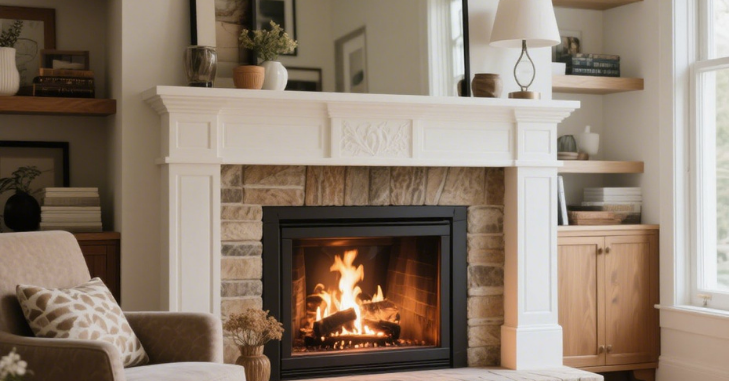
Natural stone or lightweight manufactured stone veneer gives a fireplace mass and texture. Stacked ledgestone suits modern rustic and mountain styles, while rounded fieldstone reads as cottage or lodge. Veneer is lighter and easier to install over a prepared wall than full stone, which may need its own footing. Pair stone with a chunky timber beam mantel for contrast, and run the stone to the ceiling if you want the chimney breast to feel taller.
Use noncombustible backer board and mortar systems rated for the application near the firebox. Dry-lay a section of veneer on the floor before you start so you can balance large and small pieces and avoid long continuous joints that look artificial.
3. Build In Shelving on Either Side
Built-in shelves or cabinets flanking the fireplace turn a chimney breast into a whole feature wall. Lower closed cabinets hide media equipment and clutter, and open shelves above display books, ceramics and photos. Leave some empty space on each shelf; a packed bookcase competes with the fireplace instead of framing it.
Match the shelf trim to the rest of the room. Our guide to window trim styles shows how consistent trim profiles tie a room together. Keep shelving and any wiring outside the required combustible clearances, and plan outlets inside cabinets for media gear before the carpenter starts.

4. Choose a Modern Electric Fireplace
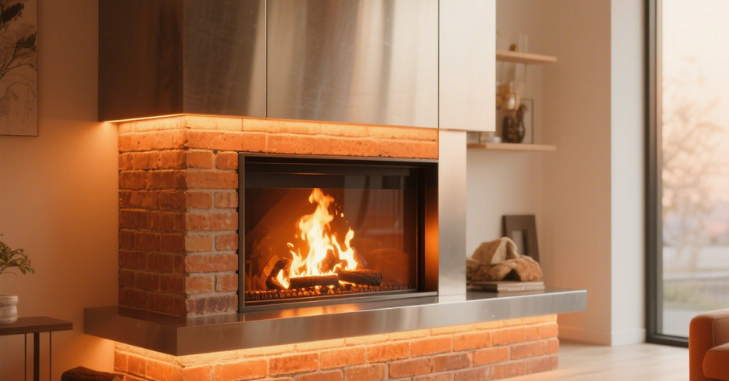
Electric fireplaces suit apartments, rooms with no chimney and homeowners who want the look without venting or fuel. Wall-mounted linear units, recessed models and firebox inserts are all available, and many allow flame effects without heat for summer use. They are also a common way to bring a disused masonry fireplace back to life without the cost of relining a chimney.
Most plug into a standard outlet, although larger recessed or heating models may need a dedicated circuit, so check the manual and hire a licensed electrician for hardwired units. When comparing models, look at flame realism in person if possible, since cheaper units can look flat from an angle.

5. Create a Gallery Wall Above the Fireplace
A tight grid of frames or a salon-style cluster above the mantel adds personality. Lay the arrangement out on the floor first, trace each frame on paper and tape the templates to the wall before drilling. Keep spacing between frames consistent (about 2 to 3 inches is common) and center the whole group over the fireplace rather than over the mantel ends.
If a TV must go above the fireplace, check both the TV and fireplace manuals for heat limits, consider a heat-deflecting mantel and remember that a high screen can strain the neck. A pull-down mount that lowers the screen to eye level is a useful compromise.
6. Install a Double-Sided Fireplace in an Open Plan
A see-through or double-sided fireplace divides a living and dining area while keeping sightlines open, and both rooms share the flame. Most are direct-vent gas or electric units installed in a new partition wall. This is a job for a professional installer because of venting, gas supply, framing and clearances, and it is easiest and cheapest to plan during a larger remodel rather than retrofit later.

If a double-sided unit is out of reach, a corner fireplace is another good option for awkward layouts. It warms a small sitting area without taking a full wall and can be viewed from two directions.
7. Use Tile for Color and Pattern
Tile is one of the most flexible surround materials. Zellige or handmade tiles add a soft, uneven sheen; large-format porcelain slabs look calm and modern; patterned cement-look tiles add personality without much cost. Floor-to-ceiling tile makes a small fireplace look taller, and a vertical stacked layout exaggerates the effect.
Near the firebox, use tiles and setting materials rated for heat and follow the fireplace maker’s instructions for what may cover the facing. Choose grout that matches the tile closely if you want a calm look, or a contrasting grout to show off the pattern.
8. Style With Cozy Seating and Textiles
Arrange seating so people face each other and the fire: a sofa opposite the fireplace and two chairs angled in, forming a U. Leave a clear walkway of about three feet and keep upholstery and rugs outside the hearth area. Layer throws in wool and knit textures, place a rug in front of the seating rather than on the hearth and use warm-toned cushions that repeat colors from the surround.
A small side table next to each chair gives somewhere to put a mug, and a basket for logs or extra blankets adds texture while keeping clutter contained.
9. Go Minimalist With Clean Lines
A linear gas or electric firebox set into a smooth plaster, microcement or painted drywall wall creates warmth through simplicity. Skip the traditional mantel, or use a thin floating shelf with two or three objects. Architectural details elsewhere in the room carry the character; a coffered ceiling or paneled wall can balance a very plain fireplace wall.
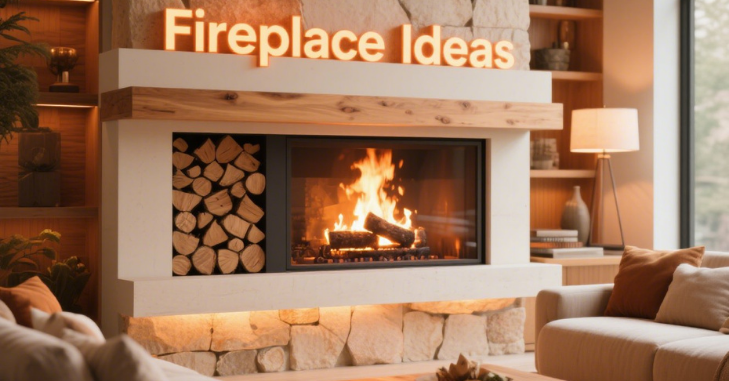
Minimal designs depend on precise finishing. Shadow gaps, flush transitions and a level firebox matter because there is no trim to hide small errors, so budget for an experienced drywall or plaster finisher.
10. Layer Warm Lighting and Candles
Plan lighting in three layers: ambient light from dimmable ceiling fixtures, accent light such as picture lights or wall sconces on either side of the chimney breast, and low lamps or candlelight near the seating. Choose warm bulbs around 2700K for a cozy glow, and put the ambient lights on a dimmer so the fire can take center stage in the evening. Flameless LED candles are a safe choice on a mantel above an active fire.
Quick Refresh Ideas for Existing Fireplaces
- Limewash or paint brick: limewash softens dated red brick while letting texture show. For painted finishes, clean the brick thoroughly and use products rated for masonry and heat near the opening.
- Replace the mantel: a reclaimed timber beam or a painted wood mantel with simple molding changes the whole look. Profiles from our crown molding guide can dress up a plain mantel shelf.
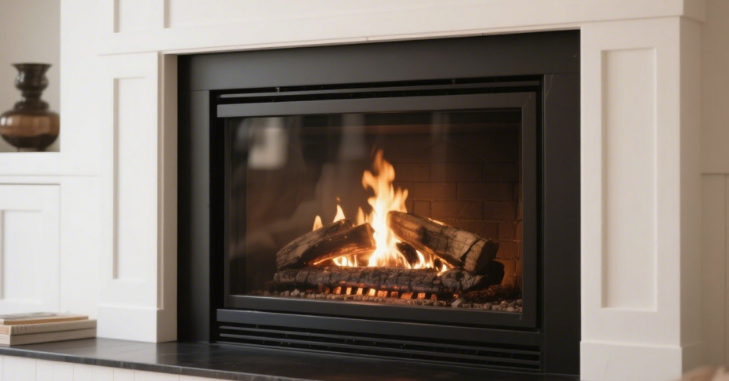
- Update the screen and doors: black steel glass doors look crisp and reduce drafts from a cold chimney when the fire is out.
- Swap the hearth tile: keep it noncombustible and meet the required hearth extension size.
- Style the firebox off season: a stack of birch logs or a group of pillar candles makes an empty firebox look intentional.

Wood vs Gas vs Electric at a Glance
| Factor | Wood-burning | Gas | Electric |
|---|---|---|---|
| Ambience | Real flame, crackle, scent | Real flame, instant on | Simulated flame |
| Maintenance | Ash removal, annual chimney inspection and sweeping as needed | Annual service check | Minimal |
| Installation | Chimney required | Vent and gas line | Outlet or dedicated circuit |
| Best for | Traditional homes, heating focus | Convenience with real flame | Apartments, easy retrofits |
Whatever you choose, install working smoke and carbon monoxide alarms, and schedule an annual inspection for wood and gas units. For gas lines, venting and hardwired electrical work, hire licensed professionals rather than doing it yourself.
Common Fireplace Makeover Mistakes
- Choosing a mantel or shelving before checking clearance rules, then having to rebuild it.
- Scaling the mantel too small for the wall, which makes the fireplace look lost.
- Hanging a TV too high with no heat check.
- Using regular latex paint and adhesives right at the firebox edge.
- Over-styling the mantel so the fire itself stops being the focal point.
Final Thoughts on Fireplace Ideas
Start with safety and clearances, then pick the one change that will make the biggest visual difference in your room: a new surround if the fireplace looks dated, built-ins if the wall feels empty, or simply better lighting, seating and mantel styling if the bones are already good. Small, well-chosen updates often make a living room feel cozier than an expensive remodel.
Frequently Asked Questions
How can I make my fireplace look cozy on a budget?
Restyle the mantel in layers, add warm 2700K lighting and candles, arrange seating to face the fire and add textured throws. Limewashing dated brick is another low-cost update with a big visual payoff.
What is the best fireplace for a small living room?
Wall-mounted or recessed electric fireplaces and compact direct-vent gas units work well because they need little depth and no traditional chimney. A corner unit can also save wall space in awkward layouts.
How far should a mantel be from the fireplace opening?
Codes commonly require combustible mantels to be at least 6 inches from the opening, with more clearance for deeper mantels. Factory-built and gas units follow the manufacturer’s manual, so check it before installing.
Can I put a TV above my fireplace?
You can, but check the heat limits in both the TV and fireplace manuals. A mantel can help deflect heat, and a pull-down mount keeps the viewing height comfortable.
Can I paint a brick fireplace?
Yes. Clean the brick well, use masonry primer and paint or limewash, and use heat-rated products on the areas closest to the firebox. Limewash is easier to touch up and lets the brick texture show.
Is an electric fireplace worth it?
For apartments and rooms without a chimney, usually yes, because installation is simple and maintenance is minimal. They do not give a real flame, so if ambience is the priority, compare them in person with gas units.