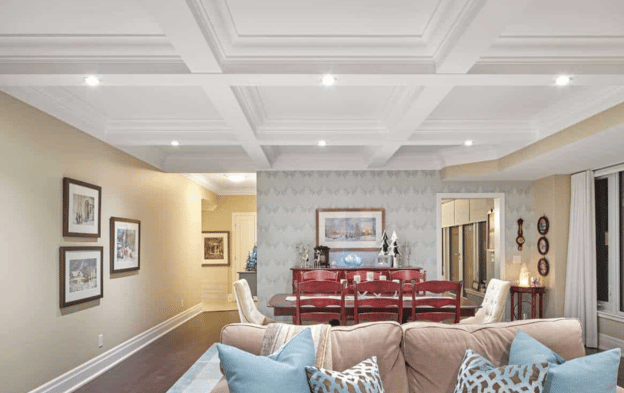
The best coffered ceiling ideas match the grid, finish and depth to the room: crisp white beams for a bright, classic look, stained wood for warmth, contrasting paint for drama, and shallow, slim grids for modern spaces. A coffered ceiling is a grid of recessed panels framed by beams, and it works best in rooms with ceilings around 9 feet or higher, where the added depth makes the space feel richer rather than lower.
Below are the main styles, how to choose materials, layout and lighting, where coffers suit each room, what affects cost, and the mistakes that make a coffered ceiling look heavy instead of elegant.
Coffered ceilings at a glance
| Aspect | Details |
|---|---|
| What it is | A grid of beams creating recessed panels (coffers) across the ceiling |
| Main benefits | Architectural depth, a focal point, some reduction in echo, perceived value |
| Popular styles | Classic white, stained wood, painted contrast, modern minimalist, geometric |
| Common materials | Solid wood, MDF, polyurethane, plaster or gypsum, metal accents |
| Best ceiling height | Around 9 feet or higher; simpler, shallower designs for lower rooms |
| Best rooms | Living room, dining room, primary bedroom, home office, library |
| Maintenance | Regular dusting, controlled humidity, occasional paint touch-ups |

What is a coffered ceiling?
Coffers are sunken panels, traditionally square, set into a ceiling between intersecting beams. The idea is ancient: the dome of the Pantheon in Rome is one of the most famous examples, where coffers reduced weight while adding pattern. In homes today the beams are almost always decorative boxes fixed to the existing ceiling rather than structural members, which keeps weight down and makes the look achievable in an ordinary room.
A coffered ceiling differs from a tray ceiling, which has a single raised central section, and from exposed beams, which run in one direction only. The grid is what gives coffers their formal, tailored character.
Why choose a coffered ceiling?
- Architectural interest: beams break up a flat ceiling plane and add layered shadow and detail.
- A natural focal point: the grid draws the eye up and frames a chandelier or seating area.
- Defined zones: in open-plan spaces, a coffered section can mark the dining or living area without walls.
- Softer acoustics: the recesses and beam edges break up flat reflecting surfaces, which can reduce echo slightly in large, hard-surfaced rooms. For a real acoustic improvement, fit acoustic panels inside the coffers.
- Market appeal: well-proportioned custom ceiling work is often seen as a premium finish by buyers.
Popular coffered ceiling ideas and styles
1. Classic white coffered ceiling
White beams with panels in the same white create a clean, bright, traditional look that suits almost any home. It is the safest choice for living rooms, dining rooms and bedrooms, and it reflects light rather than absorbing it. Use a satin or semi-gloss on the beams and flat paint in the panels so the shadows read clearly.
2. Stained wood beam coffers
Natural or stained wood beams in oak, walnut or cherry bring warmth and texture, especially against lighter panels. They suit traditional, farmhouse, craftsman and library-style rooms. Because dark wood visually lowers a ceiling, keep this idea for rooms with generous height or plenty of daylight.
3. Painted contrast
Painting the beams and panels different colors adds drama. Dark navy beams with soft cream panels, or white beams with a pale blue or sage panel, are popular combinations. Painting the whole ceiling one deep color, beams included, creates an intimate, enveloping feel that works well in dining rooms and dens.
4. Modern minimalist grid
Slim, shallow beams in a simple square grid, painted the same color as the ceiling, give texture without fuss. Skip ornate crown molding inside the coffers and use a crisp square edge instead. This is the best option for contemporary interiors and for rooms close to the 8-foot minimum.
5. Geometric and octagonal coffers
Hexagonal, octagonal or diamond patterns move away from the standard square grid and add an artistic touch for modern or eclectic rooms. They take more planning and more cutting, so they generally cost more to build than a simple grid.
6. Wallpapered or textured panels
Lining the recessed panels with patterned wallpaper, grasscloth, a metallic finish or wood planks adds an unexpected layer while keeping the beams clean. It is an easy way to bring color into a room with otherwise neutral walls.
7. Coffers with integrated lighting
LED strip lighting tucked along the top edge of each beam washes light across the panels, while recessed downlights centered in each coffer give practical task lighting. Combine both with a central chandelier for a layered scheme you can dim for evenings.

Choosing materials
| Material | Pros | Watch out for | Best for |
|---|---|---|---|
| Solid wood | Authentic grain, can be stained | Heavier, moves with humidity, higher cost | Stained-wood looks, libraries, dens |
| MDF | Smooth, stable, easy to paint, budget-friendly | Swells if it gets wet | Painted coffers in dry rooms |
| Polyurethane or polystyrene | Lightweight, moisture-resistant, easy to fit | Can look less crisp up close | Bathrooms, DIY kits |
| Plaster or gypsum | Seamless finish, custom moldings | Skilled labor needed | High-end traditional interiors |
| Metal accents | Industrial or modern feel | Limited suppliers, specialist fixing | Lofts and contemporary spaces |
Planning the layout: proportions that work
- Ceiling height: around 9 feet or more is ideal. With 8-foot ceilings, keep beams shallow and the color matched to the ceiling so the room does not feel lower.
- Beam depth and width: deeper, wider beams suit tall, large rooms; thinner beams suit smaller spaces. Keep every beam the same size for a tailored look.
- Coffer size: aim for evenly sized panels across the room. Measure first and adjust the grid so you do not end up with thin slivers at the walls.
- Center on the room’s features: align the grid with the fireplace, windows or dining table, and plan where the chandelier will hang before beams go up.
- Plan lighting and wiring early: it is far easier to run cables before the panels are closed in.
- Check the structure: confirm where the joists run so beams can be fixed securely. If you are considering solid timber beams, ask a contractor or structural engineer whether the ceiling can carry the weight.
What affects the cost?
Prices vary widely by region, room size and finish, so get several quotes. The main factors are:
- Material choice, with solid hardwood and custom plaster at the top end and MDF or polyurethane kits at the lower end
- Room size and the number of beam intersections
- Pattern complexity: geometric layouts and added moldings take more labor
- Integrated lighting and any electrical work, which should be done by a licensed electrician
- Finishing: staining and multi-coat paint finishes take longer than primed, ready-to-paint products
A simple painted MDF grid installed by a capable DIYer can be relatively affordable, while a custom hardwood or plaster ceiling is a significant investment best left to a finish carpenter.
Common mistakes to avoid
- Installing deep, dark coffers on a low ceiling, which makes the room feel cramped
- Uneven grids with narrow panels squeezed in at one wall
- Forgetting lighting until the ceiling is finished
- Using MDF in a steamy bathroom without a moisture-resistant alternative
- Over-decorating with heavy moldings in a modern room
Room-by-room ideas

- Living room: a classic white grid with a statement chandelier or fan centered in the middle coffer creates a polished gathering space.
- Dining room: dark-stained beams or a bold panel color add drama above the table; center the grid on the table, not the room, if they differ.
- Bedroom: a subtle white-on-white grid keeps the mood calm, with dimmable LED strips for soft evening light.
- Home office or library: wood coffers paired with built-in shelving give a classic study feel; geometric coffers suit a creative workspace.
- Bathroom: choose moisture-resistant polyurethane, use paint rated for bathrooms and make sure the room is well ventilated.
Maintenance and care
Dust beams and panels every few weeks with a microfiber duster on an extension pole, paying attention to the top edges of beams where dust settles. Touch up chips in paint as they appear, keeping a labeled can of each color. Wood beams can warp or open at the joints with large humidity swings, so a dehumidifier helps in damp climates. If your ceiling has built-in lighting, check fixtures periodically and have any electrical problems handled by a licensed electrician.
Final Thoughts on Coffered Ceiling Ideas
Start with the room’s height and style, then pick a grid and finish to match: white and shallow for brightness and lower ceilings, stained wood or contrasting paint for drama in taller rooms. Plan the layout around the room’s focal point, decide on lighting before the panels close, and choose moisture-resistant materials where needed. Get it right and the ceiling becomes the detail people notice first. For more inspiration, explore our Interior Design category.
FAQs
What are the drawbacks of a coffered ceiling?
Coffered ceilings cost more than a plain ceiling, gather dust on the beam tops and can make a low room feel lower. Solid timber beams also add weight, so a contractor should confirm the ceiling can support them.
Does a coffered ceiling make a room look bigger?
It can make a tall room feel grander by adding depth, but deep or dark beams can make a low ceiling feel lower. In rooms around 8 feet high, use shallow beams painted the same color as the ceiling.
What color should a coffered ceiling be?
White or the same color as the ceiling gives subtle texture and keeps the room bright. Contrasting beams and panels, such as navy and cream, make the ceiling a bold feature.
What is the minimum ceiling height for a coffered ceiling?
Around 9 feet is ideal. A simple, shallow grid can still work on an 8-foot ceiling if the beams are slim and painted to match the ceiling.
Can you install a coffered ceiling yourself?
A basic grid using MDF or polyurethane kits is a realistic project for an experienced DIYer with accurate measuring and a helper. Complex patterns, solid wood, plaster and any new wiring are best left to professionals.
What is the difference between a coffered and a tray ceiling?
A coffered ceiling has a grid of beams forming many recessed panels. A tray ceiling has one raised central section, usually with a stepped edge around the room’s perimeter.