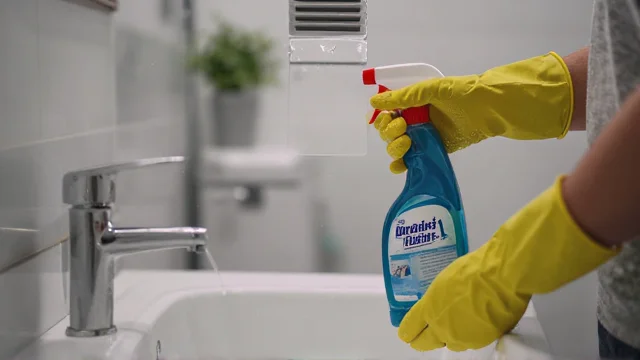
Finding dark spots on grout, shower walls, ceilings, or basement surfaces usually means moisture needs attention. A mold and mildew remover can clean visible growth or staining when you choose the right formula. Yet lasting results depend on removing the growth and correcting the moisture source.
For most small household spots, choose a cleaner labeled for the specific surface and cleaning goal. Bleach-based products can whiten stains quickly on compatible hard surfaces, while bleach-free options may suit more materials. Whatever you choose, remove visible growth, dry the area, and correct the moisture source to reduce recurrence.
| Situation | Practical Approach | Important Consideration |
|---|---|---|
| White tile or grout | Labeled bathroom remover | Check whether bleach is compatible. |
| Painted walls | Surface-safe, often bleach-free cleaner | Test a hidden area first. |
| Shower caulk | Product labeled for the material | Staining may remain in damaged caulk. |
| Sealed hard surfaces | Cleaner approved by the manufacturer | Follow contact-time directions. |
| Wet drywall or carpet | Assess whether material can be saved | Porous material may require replacement. |
| Area larger than about 10 square feet | Consider professional cleanup. | EPA recommends added caution. |
| Recurring growth | Repair the moisture source. | Cleaning alone will not prevent recurrence. |
The EPA identifies moisture control as the key to controlling indoor mold. It advises scrubbing hard surfaces with detergent and water, then drying them completely. Moldy, porous materials can be difficult or impossible to clean fully.
What Does a Mold Remover Really Do?
Not every cleaner performs the same job, even when packaging looks similar. One product may mainly remove stains, while another carries disinfecting or mold-control claims. Reading the label helps you understand what the formula is designed to accomplish.
Third-party testing also shows why those differences matter. Good Housekeeping found bleach-free CLR effective at removing visible stains without strong fumes. That product was not presented as a disinfectant or mold-killing treatment.
Bleach-containing formulas can provide stain whitening and labeled antimicrobial action on compatible hard surfaces. They can also create stronger odors and damage certain fabrics or finishes. Surface compatibility matters as much as cleaning strength.
How to Choose a Mold and Mildew Remover for Your Surface
Start by identifying the material rather than buying the strongest-looking bottle. Tile, painted drywall, natural stone, fabric, wood, and caulk can react differently to one formula. Always check the product label before applying a cleaner to an unfamiliar surface.
| Remover Type | Good Fit | Main Advantage | Main Limitation |
|---|---|---|---|
| Bleach-based spray | Compatible bathroom tile, white grout, sinks | Fast stain whitening and some labeled antimicrobial uses | Odor, discoloration, and surface restrictions |
| Bleach-free stain remover | Painted walls, selected fabrics, tile, and other labeled surfaces | Lower risk of bleach-related discoloration | May only remove stains |
| Registered mold-control product | Uses specifically listed on its EPA label | Defined antimicrobial claims and directions | Must be used exactly as labeled |
| Detergent and water | Small hard-surface cleanup | Simple physical removal | Requires scrubbing and complete drying |
Recommendation: match the formula to the surface and the result you need. Choose a labeled bleach formula when whitening or registered antimicrobial action matters on a compatible surface. Choose a bleach-free cleaner when its surface directions better match the material.
For recurring growth, neither option fixes the underlying problem. Water leaks, condensation, poor ventilation, or persistent humidity can allow the problem to return. Fixing those conditions matters more than repeatedly applying stronger chemicals.
Price can help narrow your choice, but it should not drive the decision. Current U.S. retailer listings show many 32-ounce sprays around roughly $6 to $12. Larger containers and specialized control products can cost considerably more.
How to Use a Mold Remover Safely
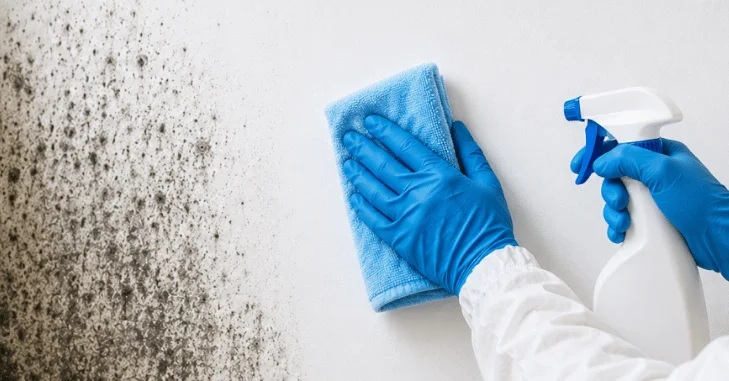
Preparation protects both you and the material you are cleaning. CDC guidance recommends protective gloves, eye protection, and at least an N95 respirator during mold cleanup. Good ventilation is also important when using cleaning products indoors.
- Stop the moisture source. Repair leaks or reduce condensation before focusing on cosmetic staining.
- Read the entire product label. Confirm approved surfaces, protective equipment, contact time, and rinsing directions.
- Ventilate the space. Open windows or doors when safe, and use suitable exhaust ventilation.
- Wear protective equipment. Use gloves, eye protection, and respiratory protection appropriate for the cleanup.
- Test a small area. Check an inconspicuous spot for discoloration or surface damage.
- Apply exactly as directed. Do not increase concentration or combine the product with another cleaner.
- Remove residue and dry completely. Follow rinsing directions, then eliminate remaining moisture.
Never combine cleaning products unless a label specifically directs you to do so. The CDC warns against mixing bleach with ammonia or other cleaners because dangerous vapors can form. Following the manufacturer’s directions is safer than creating stronger mixtures yourself.
Choosing a Cleaner for Bathrooms and Grout
Bathrooms commonly develop staining because showers add water vapor to a confined space. Smooth tile and many glazed surfaces are easier to clean than absorbent materials. Grout and caulk require more attention because their condition and composition vary.
A bleach-based bathroom product may suit white grout when its label permits that use. A bleach-free foam may be preferable when discoloration or harsh odor is a concern. Always follow the surface directions rather than assuming every bathroom cleaner is interchangeable.
Prevention should continue after the surface looks clean. Proper exhaust ventilation reduces lingering moisture after bathing. Renovixa’s bathroom fan installation guide explains ventilation options that can help manage bathroom humidity.
What About Painted Walls and Ceilings?
Painted surfaces require a gentler approach because strong products can fade or damage the finish. Check whether the cleaner specifically lists painted walls or ceilings as compatible. Testing a hidden area can reveal unwanted color changes before broader application.
Repeated ceiling spots often indicate more than a cleaning problem. Condensation, roof leakage, plumbing issues, or poor ventilation may be supplying moisture. Cleaning the stain without fixing that source usually creates a short-lived result.
Avoid painting directly over active growth. EPA guidance recommends removing the mold and drying the surface before painting or caulking. Paint applied over moldy material may peel and does not solve the cause.
Wood, Fabric, Drywall, and Other Porous Materials
Porous materials present a harder cleanup problem because growth can extend below the visible surface. Carpet, ceiling tiles, insulation, and some drywall may be difficult to clean completely. Replacement can be necessary when contamination or water damage is extensive.
Wood should be assessed according to its finish, condition, and the cleaner’s label. Fabric products also need material-specific directions to reduce fading or fiber damage. Do not assume a product marketed for bathroom tile is suitable for upholstery or unfinished wood.
Persistent basement problems usually require moisture control alongside surface cleaning. Renovixa’s basement waterproofing guide covers common sources of basement water intrusion. Its moisture barrier guide also explains where moisture-control systems can help.
Is Bleach Necessary?
Bleach can be useful for particular labeled applications, but it is not the definition of proper mold cleanup. EPA does not recommend routine use of biocides simply to sterilize a moldy area. The agency emphasizes physical removal and correction of moisture conditions.
EPA also notes that dead mold can still trigger allergic reactions in some people. Killing growth without removing it is therefore incomplete cleanup. Visible material should still be removed according to appropriate cleaning guidance.
CDC guidance allows household bleach for certain cleanup situations when used correctly. It also stresses ventilation, protective equipment, and strict separation from other cleaners. A commercial product’s own label should remain your primary application guide.
How to Keep Mold From Coming Back
The most effective prevention strategy is keeping building materials dry. Repair roof, plumbing, and window leaks as soon as you find them. Use ventilation or dehumidification where moisture regularly accumulates.
Bathrooms benefit from exhaust fans that vent outdoors rather than into an attic. Basements may need drainage, waterproofing, or better control of ground moisture. Other rooms can develop problems around cold surfaces where condensation repeatedly forms.
Routine inspection makes small moisture problems easier to catch. Check beneath sinks, around windows, behind furniture, and near exterior walls after storms. A musty odor can also signal hidden growth that deserves investigation.
When Should You Call a Mold Professional?
Many homeowners can address a small patch on a washable hard surface. EPA says areas smaller than about 10 square feet can often be handled by homeowners. Larger areas, major water damage, or hidden contamination deserve professional assessment.
Professional help also makes sense when contaminated porous materials require removal. The same applies when growth returns despite moisture repairs and careful cleaning. People with certain respiratory conditions or weakened immune systems should avoid participating in mold cleanup.
Frequently Asked Questions
Does a mold and mildew remover stop mold from coming back?
A cleaner can remove stains or growth according to its labeled purpose. It cannot repair leaks, condensation, or poor ventilation that supplied the moisture. Preventing recurrence requires keeping the affected material dry after cleanup.
Is bleach-free mold cleaner effective?
Bleach-free products can work well for removing visible stains when designed for that purpose. Some formulas are suitable for surfaces where bleach could discolor the material. Check whether the product removes stains, controls mold, disinfects, or performs another specific function.
Can I use the same remover on every surface?
No cleaner should be assumed safe for every household material. Natural stone, fabrics, wood, paint, metals, grout, and plastics can have different restrictions. Read the label and test an inconspicuous area before wider use.
Do I need to identify the type of mold before cleaning it?
CDC says homeowners generally do not need to identify the mold species before addressing visible household growth. The priority is removing the growth safely and correcting the moisture problem. Testing can add cost without changing those basic cleanup steps.
What should I do if the mold keeps returning?
Repeated growth usually points to continuing moisture or incomplete removal. Look for plumbing leaks, condensation, inadequate ventilation, or water entering through the building envelope. Fix that source before spending money on repeated applications of cleaner.
The Practical Takeaway
Choose a cleaner by its labeled purpose, compatible surfaces, and safety directions rather than marketing strength. Remove visible growth, dry the material, and correct the water or humidity problem behind it. Those steps give U.S. homeowners a safer path toward lasting results instead of repeatedly treating the same stain.