
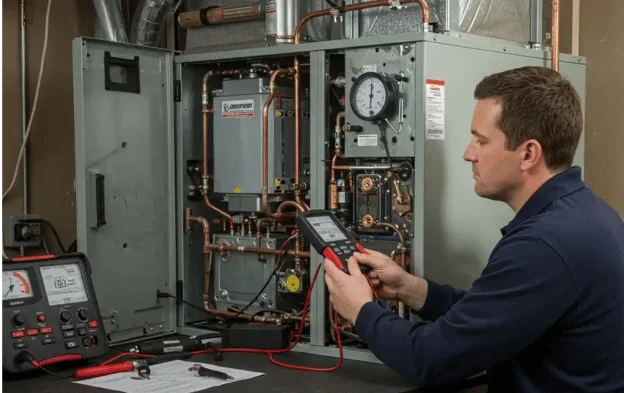
Regular furnace maintenance helps your heating equipment run safely, reliably, and efficiently through cold weather. Most homeowners can handle filters, vents, thermostat checks, and basic housekeeping. Combustion components, electrical testing, gas connections, and heat-exchanger inspections should generally be left to qualified HVAC professionals.
A good routine combines simple homeowner checks with an annual professional tune-up. ENERGY STAR recommends annual pre-season heating checkups and regular filter inspections. Scheduling service before winter also gives you time to address problems before temperatures fall.
| Maintenance question | Practical answer |
|---|---|
| Best time for professional service | Fall, before regular heating begins |
| Professional service frequency | Generally once each year |
| Filter inspection | Check monthly during heavy-use periods |
| Filter replacement | Follow the manufacturer; many need replacement within one to three months |
| Safe homeowner tasks | Filters, accessible vents, thermostat checks, and surrounding-area cleanup |
| Professional tasks | Combustion, heat exchanger, electrical, fuel, venting, and performance checks |
| Warning signs | Unusual noises, odors, short cycling, weak airflow, or uneven temperatures |
Quick answer: A useful maintenance routine starts with monthly filter checks and clear supply and return vents. Test the thermostat before cold weather arrives. Keep combustible clutter away from heating equipment. Schedule professional service each year so a trained technician can inspect combustion, electrical, venting, airflow, and safety components.
Why Furnace Maintenance Matters
Heating equipment combines airflow, electrical controls, moving components, and sometimes fuel combustion. Problems in any of these areas can reduce comfort or cause unexpected shutdowns. Preventive checks give you an opportunity to identify changes before peak heating season.
Airflow deserves particular attention because a clogged filter can make equipment work harder. ENERGY STAR advises checking the filter every month, especially during heavy-use seasons. According to its heating and cooling guidance, homeowners should replace a dirty filter and change it at least every three months.
Maintenance also supports safe operation of fuel-burning systems. A professional can inspect burners, fuel connections, venting, controls, and the heat exchanger. These areas require knowledge and testing equipment that typical homeowners do not have.
A Simple Furnace Maintenance Schedule
You do not need to perform every task on the same day. Breaking the work into monthly, seasonal, and annual checks makes the routine easier. It also helps you notice gradual changes in heating performance.
| When | What to check | Who should handle it? |
|---|---|---|
| Monthly during heating season | Air filter and accessible vents | Homeowner |
| Before heating season | Thermostat, vents, surrounding area, test run | Homeowner |
| Annually | Full system inspection and tune-up | HVAC professional |
| When symptoms appear | Noise, odor, cycling, airflow, or heating problems | Homeowner first, then professional |
| After a safety alarm | Stop normal troubleshooting and follow emergency guidance | Emergency services or qualified professional |
The exact schedule can vary by equipment and filter type. Your owner’s manual should take priority when it gives a specific service interval. Homes with pets, construction dust, or heavy system use may need more frequent filter attention.
6 Maintenance Tasks Homeowners Can Safely Handle
These checks focus on accessible areas and normal operation. Do not remove sealed combustion components or adjust gas equipment unless the manufacturer specifically permits it. Stop if a task requires electrical testing, fuel adjustments, or specialized tools.
- Inspect the air filter. Check it monthly during periods of frequent heating. Replace or clean it according to the equipment and filter manufacturer’s directions.
- Keep supply vents open. Look for furniture, rugs, boxes, or curtains blocking registers. Good airflow helps conditioned air move through the home as designed.
- Check return-air grilles. Remove obvious surface dust with a vacuum when needed. Avoid pushing tools deep into ductwork or mechanical equipment.
- Test the thermostat. Raise the temperature setting and confirm the system starts normally. Notice delayed starts, unexpected shutdowns, or unusual cycling.
- Clear the equipment area. Remove stored objects, dust, and combustible materials from the immediate surroundings. Follow the clearances listed by the manufacturer.
- Listen during a test run. Familiar operating sounds should remain reasonably consistent. New rattling, squealing, banging, or repeated starting deserves further investigation.
For deeper cleaning guidance, Renovixa also has a dedicated Dryer Vent Hoses guide. That resource covers cleaning tasks in more detail. Keeping this article focused on preventive care avoids confusing cleaning with complete professional servicing.
What a Professional Tune-Up Should Cover
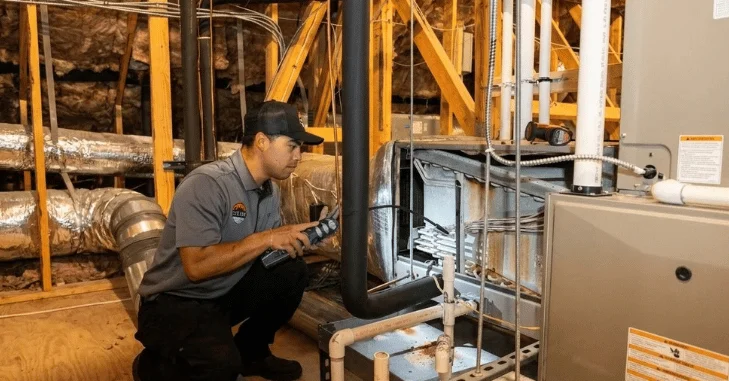
A professional visit involves much more than changing a filter. According to the ENERGY STAR maintenance checklist, technicians should inspect electrical connections, controls, moving components, and heating-specific safety checks, including fuel connections, burner combustion, and the heat exchanger.
Carrier’s current service checklist provides another useful example of professional scope. It includes filtration, thermostat operation, heating performance, burners, gas controls, the heat exchanger, blower, wiring, venting, and fuel supply. Exact procedures still depend on the model and manufacturer requirements.
Ask the technician what measurements and safety checks are included before booking. A written service record can help you track changes between visits. Keep that record with equipment manuals, warranty documents, and previous repair invoices.
When Should You Schedule Professional Service?
Fall is usually the practical time to arrange annual service in most U.S. climates. ENERGY STAR recommends pre-season heating checkups and notes that contractors become busier once winter arrives. Earlier scheduling can make appointment timing easier.
Do not wait for the annual appointment when the system begins behaving differently. Unusual odors, new noises, repeated cycling, or persistent heating problems deserve attention. A sudden change often provides more useful diagnostic information than equipment age alone.
A carbon-monoxide alarm requires a different response from routine maintenance. Leave the affected area and follow the alarm manufacturer’s emergency instructions and local emergency guidance. Do not keep operating questionable combustion equipment while attempting home troubleshooting.
Maintenance, Repair, or Replacement?
Preventive service is intended to preserve normal operation and identify developing problems. Repair addresses a specific failed or malfunctioning component. Replacement becomes a separate decision when age, reliability, safety, repair costs, and performance make continued ownership less practical.
Do not assume an older system automatically needs replacement. A qualified technician should diagnose the problem before you make a major purchase. Ask for the failed component, repair scope, expected outcome, and written price.
Renovixa’s 2026 furnace replacement guide explains the replacement decision in greater detail. It covers warning signs, current U.S. cost considerations, efficiency, and installation factors. Use that information when a maintenance visit uncovers a major failure.
Common Signs Your Heating System Needs Attention
Changes in operation often matter more than a single maintenance date. Pay attention to how the system sounds, starts, stops, and distributes heat. Comparing current behavior with normal operation can help you describe the problem accurately.
Watch for these warning signs.
- New rattling, squealing, buzzing, or banging sounds.
- Repeated starting and stopping.
- Weak airflow from multiple supply registers.
- Rooms becoming noticeably uneven in temperature.
- Unusual odors during operation.
- A sudden unexplained change in heating costs.
- Visible damage around accessible venting.
- Persistent failure to reach the thermostat setting.
These symptoms do not identify one specific failure by themselves. Airflow, controls, ductwork, mechanical components, and combustion problems can produce similar effects. A proper diagnosis should identify the cause before parts are replaced.
How Maintenance Can Support Energy Efficiency
Heating and cooling account for a substantial share of household energy use. ENERGY STAR says nearly half of home energy use goes toward heating and cooling. Small efficiency problems can therefore matter over a long heating season.
Clean filters support airflow and reduce unnecessary resistance through the system. Sealed and insulated ducts can also reduce energy losses, particularly through unconditioned spaces. ENERGY STAR reports that duct sealing and insulation can improve heating and cooling efficiency by up to 20 percent.
Maintenance cannot guarantee a fixed percentage reduction in your utility bill. Weather, thermostat settings, insulation, equipment condition, fuel prices, and household habits all affect consumption. Treat claims promising a specific maintenance-related savings percentage with caution.
A Pre-Winter Checklist You Can Save
Complete your basic checks before the first sustained cold period. This timing gives you room to schedule service without waiting for an emergency. It also establishes a useful performance baseline for the coming season.
- Check the filter and replace it when required.
- Confirm supply registers and returns are unobstructed.
- Remove clutter around heating equipment.
- Test the thermostat and heating cycle.
- Listen for unfamiliar operating noises.
- Check accessible venting for obvious visible damage.
- Test smoke and carbon monoxide alarms according to manufacturer instructions.
- Schedule the annual professional inspection.
- Record any symptoms you want the technician to investigate.
Keep the checklist with your home maintenance records after completing it. Note the service date and any parts replaced. That history can make future troubleshooting and repair decisions easier.
Frequently Asked Questions About Furnace Maintenance
How often should furnace maintenance be done?
Professional service is generally recommended once each year. Fall is a practical time because it precedes the main heating season in many U.S. regions. Manufacturer requirements should take priority when they specify another schedule.
How often should I change my heating-system filter?
ENERGY STAR recommends checking filters monthly, especially during heavy heating and cooling periods. It advises changing a dirty filter and replacing it at least every three months. Your filter manufacturer may specify a different interval for your particular product.
Can I perform annual heating maintenance myself?
You can handle basic tasks such as filter changes, vent checks, thermostat testing, and surrounding-area cleanup. Professional servicing includes areas that require training, instruments, and safety knowledge. Fuel, combustion, heat-exchanger, and electrical testing should generally stay with qualified technicians.
What does a professional heating tune-up include?
The exact checklist depends on the equipment and manufacturer. Typical service covers airflow, controls, electrical components, combustion equipment, venting, the blower, and safety systems. Ask the contractor to describe the included inspections and measurements before the appointment.
Is cleaning the same as maintenance?
Cleaning is one part of preventive service, but the terms are not interchangeable. A complete service visit can include inspection, testing, measurements, adjustments, and safety checks. Renovixa’s separate cleaning guide explains the cleaning side in greater depth.
Does annual maintenance prevent every breakdown?
No maintenance program can guarantee that equipment will never fail. Preventive service can identify wear, contamination, airflow problems, or abnormal operation before some issues become more disruptive. Unexpected component failures can still occur.
Keep Your Heating System Ready Before Cold Weather Arrives
A practical maintenance routine does not require homeowners to dismantle complicated equipment. Focus on filters, airflow, thermostat operation, accessible areas, and changes you can observe safely. Leave combustion, electrical, fuel, and internal safety inspections to trained professionals.
Schedule annual service before the heating season whenever possible. Keep written records so you can compare performance and repair history over time. Early attention to unusual symptoms can also reduce the chance of discovering a problem during severe weather.
Preventive care is only one part of maintaining an efficient home. Insulation, air sealing, duct condition, and thermostat habits also influence comfort and energy use. Renovixa’s closed-cell spray foam guide offers additional information about insulation and reducing unwanted heat transfer.

