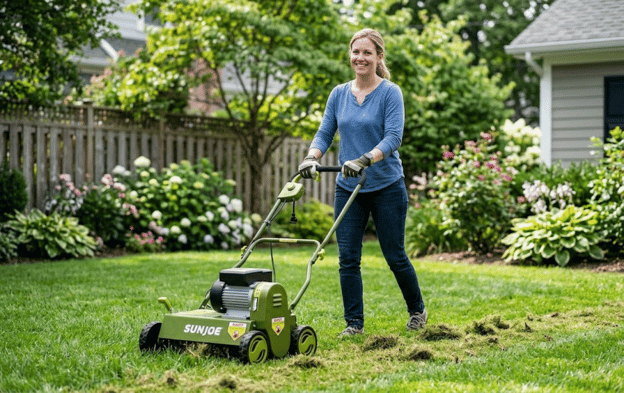
A lawn dethatcher removes excess thatch from between living grass and the soil surface. The right tool depends on yard size, thatch thickness, access to power, and how often you plan to use it. For many U.S. homeowners, a manual rake or electric machine provides enough capacity without unnecessary cost.
Thatch itself is not automatically harmful. A thin layer can cushion turf and help reduce moisture loss. Problems become more likely when the layer grows beyond roughly half an inch.
Quick answer: Choose a manual rake for small areas, an electric machine for typical suburban yards, and tow-behind equipment for large properties. Measure the thatch first, because healthy turf with less than about half an inch of buildup often needs no aggressive removal.
Lawn Dethatcher Options at a Glance
| Type | Best fit | Main advantage | Main drawback |
|---|---|---|---|
| Manual thatch rake | Small lawns and spot work | Low cost and precise control | Requires more physical effort |
| Corded electric | Small to medium lawns | Consistent power and simple maintenance | Extension cord limits movement |
| Battery-powered | Small to medium lawns | No cord and easy maneuvering | Runtime depends on battery capacity |
| Tow-behind | Large lawns with riding equipment | Covers wide areas efficiently | Requires a compatible mower or tractor |
| Vertical mower or power rake | Heavy buildup or renovation | More aggressive removal | Greater risk of turf damage |
Key Takeaways
- Measure the thatch layer before using aggressive equipment.
- A layer around half an inch or less often needs no removal.
- Manual tools suit small lawns and isolated trouble spots.
- Electric machines fit many ordinary residential properties.
- Tow-behind attachments make more sense across large areas.
- Dethatch while grass is actively growing and able to recover.
- Avoid aggressive work during drought, heat, or severe turf stress.
What Does a Dethatching Tool Actually Do?
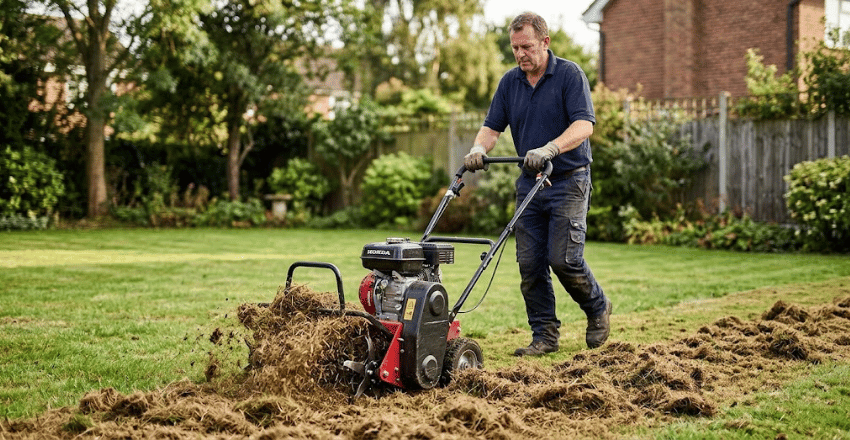
Thatch is a dense layer of partly decomposed stems, roots, crowns, and other plant material. It forms between green grass and the soil surface. Excess buildup can disrupt water movement and weaken turf.
A dethatcher uses metal tines or blades to loosen that material and bring it toward the surface. You can then rake, bag, or collect the debris. Powered models complete this work faster across larger areas than hand rakes.
This process differs from simply removing loose grass clippings. Normal clippings usually break down without becoming the main cause of serious thatch. Penn State notes that little evidence supports blaming routine clippings for buildup.
How to Tell Whether Your Lawn Needs Dethatching
Do not judge thatch thickness from the top of the lawn. Cut a small wedge of turf deep enough to expose the soil line. Measure the brown, tightly woven layer between the soil and green vegetation.
Suppose that layer measures about half an inch or less; aggressive removal may do more harm than good. The University of Minnesota Extension says this depth usually isn’t a problem. Illinois Extension gives similar guidance for layers below half an inch.
A spongy feel can also suggest significant buildup, but measurement is more dependable. Poor water penetration can also be caused by other factors, including compacted soil. Diagnose the problem before you buy equipment or tear up healthy turf.
How to Choose a Lawn Dethatcher for Your Yard. Use yard size as
Yard size should be your first filter because it affects effort, power needs, and time spent working. Current buying guides separate tools into manual, walk-behind electric, cordless, and tow-behind categories. That basic division helps homeowners avoid buying more machine than their property needs.
1. Match the Tool to Your Lawn Size
A hand rake makes sense for a compact lawn or a few problem areas. It gives you direct control over pressure and working depth. The tradeoff is greater physical effort during larger jobs.
A corded or battery-powered machine suits many suburban lawns. Rotating spring tines cover ground faster than manual raking. Adjustable depth settings also help reduce unnecessary contact with healthy turf.
Large properties may justify a tow-behind attachment. These tools connect to compatible riding equipment and cover wider paths. They are less practical when narrow gates, landscaping, or tight corners dominate the yard.
2. Look for Adjustable Working Depth
Depth control matters because the goal is removing excess material without unnecessarily damaging living grass. A shallow first pass can show how the turf responds. Increase the setting only when you need more removal.
Penn State recommends starting conservatively with aggressive vertical equipment. Removing too much material can severely thin a lawn. Heavy buildup may also contain many living roots, increasing potential damage.
3. Compare Power Sources
Corded machines provide continuous power as long as an outlet is accessible. They avoid battery charging and engine maintenance—their main limitation is safely managing an outdoor-rated extension cord.
Battery models eliminate the cord and improve maneuverability around trees and landscaping. Their useful working time depends on battery capacity and turf conditions. Check whether batteries and chargers are included before comparing prices.
Tow-behind units rely on equipment you already own. They can be practical for larger properties with riding mowers or lawn tractors. They make little sense for homeowners who would need another machine solely to pull them.
4. Consider Cleanup Before You Start
Dethatching can pull surprising amounts of dry material from a neglected lawn. Small collection bags may fill quickly during heavy removal. Some homeowners prefer to leave debris on top and collect it afterward.
Plan where the material will go before beginning the job. Local yard-waste rules differ across U.S. communities. Composting may also be possible where local guidance allows it.
After cleanup, the grass may need careful irrigation during recovery. Renovixa’s guide to lawn watering schedules explains why measured sprinkler output beats guessing by runtime. Don’t flood freshly disturbed soil just because the lawn looks temporarily rough.
Manual vs. Electric vs. Battery vs. Tow-Behind
| Option | Pros | Cons | Best choice when |
|---|---|---|---|
| Manual rake | Affordable, precise, no power required | Slow and physically demanding | Your lawn is small |
| Corded electric | Continuous power, light maintenance | Cord management can be awkward | An outlet is conveniently located |
| Battery-powered | Mobile and relatively easy to handle | Limited runtime | You want cordless convenience |
| Tow-behind | Wide coverage and efficient on acreage | Needs riding equipment | Your property is large |
Verdict: A corded electric model is the most practical starting point for many small-to-medium residential yards. Manual rakes remain sensible for compact lawns and occasional spot work. Large properties benefit most from wider equipment that matches existing riding machinery.
Do not choose solely by motor power or working width. Easy depth adjustment can matter more when protecting established grass. Also consider storage space, replacement tines, weight, and collection design.
When Should You Dethatch?
Grass should be actively growing when you perform disruptive maintenance. That timing gives damaged turf a better chance to recover. Avoid removing heavy material during heat, drought, dormancy, or severe stress.
Cool-season lawns are commonly treated during late summer or early fall. Warm-season turf is generally handled after active growth resumes in warmer weather. Local climate and grass species should guide the final schedule.
Do not make dethatching an automatic annual task. Measure the buildup before deciding. University extension guidance recommends removal when accumulation becomes excessive rather than following a fixed yearly calendar.
Dethatching vs. Aeration
Dethatching removes organic material sitting above the soil surface. Core aeration removes small plugs from the soil. The two jobs address different problems.
Compacted soil can limit root development and reduce air or water movement. Core aeration addresses that compaction more directly. It can also encourage processes that reduce future thatch accumulation.
A yard can have both problems at the same time. Measure thatch and check soil condition before choosing equipment. A more aggressive machine will not automatically fix compacted ground.
Common Mistakes to Avoid
The biggest mistake is treating every brown layer as a problem. Removing healthy material can weaken turf without improving its growing conditions. Measure first, then start with the least aggressive approach that fits the situation.
Another mistake is setting powered equipment too deeply on the first pass. Start high enough to limit unwanted turf removal. Inspect the results before lowering the working depth.
Homeowners should also avoid attacking drought-stressed or heat-stressed grass. Recovery is slower when plants already lack moisture or active growth. Extension guidance specifically warns against aggressive thatch removal under those conditions.
What to Do After Dethatching
Remove loose material so it does not remain matted across the grass. Inspect thin areas after cleaning. Severe removal can expose bare spots that may benefit from overseeding at the right time of year.
Water according to soil moisture and grass needs rather than automatically soaking the yard. Deep, measured irrigation generally works better for established turf than constant shallow watering. Renovixa’s lawn watering guide offers a practical way to calibrate sprinkler output.
Look beyond the turf if you are planning a broader backyard project. Grade changes and drainage can influence how water moves across the property. Renovixa’s retaining wall guide covers those planning issues for sloped outdoor areas.
Frequently Asked Questions
What is a lawn dethatcher used for?
A lawn dethatcher loosens excess organic material that builds up between the grass and the soil. Metal tines or blades bring that material toward the surface for collection. The goal is to reduce problematic buildup without unnecessarily tripping healthy turf
Is dethatching good for every lawn?
No, not every lawn needs this treatment. A thin thatch layer can provide useful cushioning and moisture protection. Removal becomes more important when buildup becomes excessive and starts affecting turf performance.
Is a dethatching rake better than a powered machine?
Neither option is better for every property. Manual rakes are low-cost and offer precise control on small areas. Powered equipment saves considerable labor when the lawn becomes larger.
Should I aerate or dethatch first?
Diagnose the main problem before deciding on the sequence. Dethatching targets material above the soil, while core aeration addresses soil compaction. Lawns showing both problems may benefit from a coordinated renovation plan.
Can dethatching damage grass?
Yes, aggressive removal can thin healthy turf and pull up living plants. The risk rises when equipment goes too deep, or the grass is stressed. Starting with a conservative setting helps limit unnecessary disruption.
Choose the Tool Around the Problem, Not the Machine
The right lawn dethatcher is the one that matches your measured buildup, yard size, and working conditions. Small lawns often need only a rake, while powered equipment saves time across larger areas. Checking the turf first prevents unnecessary work and reduces the chance of damaging healthy grass.
Treat dethatching as one part of broader lawn maintenance rather than a yearly requirement. Follow it with suitable cleanup, watering, and recovery care. For other outdoor projects, Renovixa’s hardwood decking guide can help you plan durable spaces around the yard.