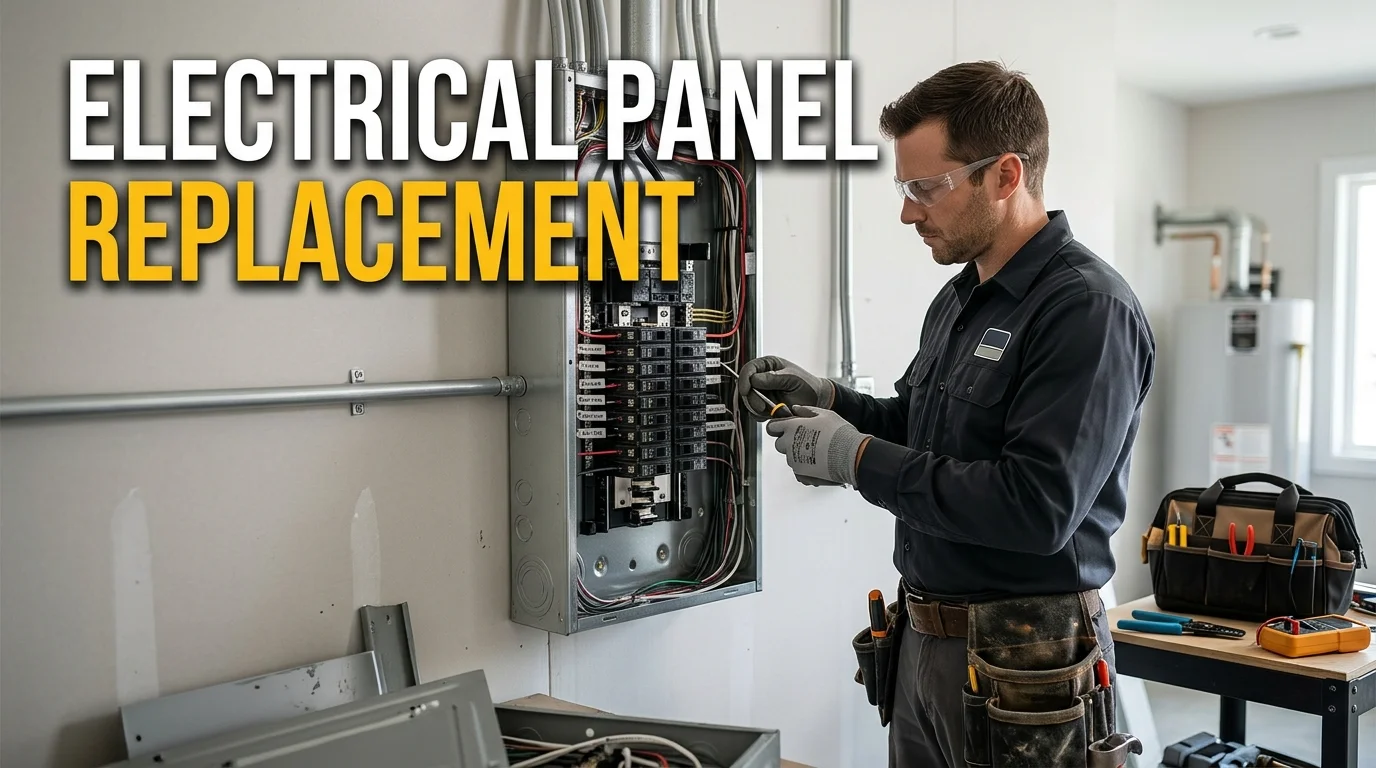
An electrical panel replacement can improve safety and prepare your home for larger electrical loads. Homeowners often consider one after recurring breaker problems, renovation plans, or major appliance upgrades. The right solution depends on capacity, wiring condition, local codes, and future power needs.
Direct answer: Electrical panel replacement commonly costs about $800 to $4,500 for many U.S. homes in 2026. Straightforward projects sit near the lower end. Higher-capacity service upgrades, meter work, damaged wiring, relocation, and code corrections can push costs beyond that range.
| Key question | Practical answer |
|---|---|
| Typical installed cost | Roughly 800–4,500 for many standard projects |
| Common household capacity | 100 to 200 amps |
| Typical project time | Often one working day for straightforward replacements |
| Permit required? | Usually required, depending on local rules |
| DIY project? | No. Panel work is for a licensed electrician with a permit and inspection |
| Common upgrade trigger | EV chargers, heat pumps, additions, or limited breaker space |
How Much Does Electrical Panel Replacement Cost in 2026?
National pricing varies because no two homes have the same wiring, service entrance, or local labor rates. Typical ranges run from roughly $500 to $2,200 for simpler jobs, with complicated projects reaching $4,500 or more. Many 200-amp projects fall closer to $1,300 to $3,000.
Those numbers work best as planning ranges rather than fixed prices. A contractor must inspect the existing service, conductors, grounding, meter equipment, and available circuit space. Local permit fees and utility requirements can also change the final amount.
| Project type | Typical U.S. planning range | What affects the price |
|---|---|---|
| 100-amp replacement | 800–1,500 | Access, breakers, permits |
| 150-amp replacement | 1,300–1,600 | Wiring condition and labor |
| 200-amp replacement | 1,300–3,000 | Capacity, breakers, service condition |
| 400-amp system | 2,000–4,000+ | Large loads and service equipment |
| Complex service upgrade | 4,000–10,000+ | Meter, mast, utility, grounding, relocation |
These figures are approximate and vary by region. Higher amperage raises material costs, but labor and service work often matter more. Request local written quotes before setting a final renovation budget.
What Makes a Panel Replacement More Expensive?
The breaker box itself represents only part of your total cost. Labor can rise when old conductors need repair or circuits require correction. Difficult access may also increase the hours required for installation.
Service entrance work can add considerably to the cost. This may include the meter base, mast, weatherhead, grounding system, or conductors entering the home. Utility coordination can also add scheduling requirements.
Moving the equipment to another location creates another cost category. Existing circuits may need extensions, new junction points, or wall repairs. Local codes may also limit where replacement equipment can be installed.
Permit and inspection charges vary by municipality. A licensed contractor should explain which permits are included in the quote. Ask whether drywall, painting, or utility fees remain your responsibility.
7 Signs Your Breaker Box May Need Replacement
A worn service panel does not always fail suddenly. Several warning signs can indicate overloaded circuits, deteriorating equipment, or inadequate capacity. A qualified electrician can determine whether repair or replacement makes sense.
- Breakers trip repeatedly. Frequent trips may indicate excessive loads, damaged circuits, or faulty equipment.
- Lights flicker or dim. Changes during appliance use can signal capacity or wiring problems.
- You hear buzzing or sizzling. Unusual electrical sounds should receive professional attention promptly.
- You notice heat or discoloration. Warm covers and visible scorching can indicate dangerous connections.
- The home still uses an old fuse box. Modern renovations may justify conversion to breakers.
- No breaker spaces remain. New appliances may require dedicated circuits that the existing box cannot support.
- You plan major electrification. An EV charger, heat pump, electric range, or addition can increase demand.
The Electrical Safety Foundation International identifies frequent trips, dimming lights, buzzing, overheating, and shocks as signs of electrical hazards. Their guidance recommends professional inspection when these symptoms appear. Never remove the panel cover to investigate energized components yourself.
Should You Repair, Replace, or Upgrade?
A single defective breaker does not automatically require complete replacement. Newer equipment with adequate capacity may only need a targeted repair. An electrician should inspect the underlying cause before recommending a larger project.
Replacement makes more sense when equipment is damaged, obsolete, crowded, or repeatedly troublesome. Older homes may also have grounding or wiring issues that an inspection uncovers. Correcting those problems can affect the project scope.
An upgrade usually means increasing available capacity rather than making a like-for-like swap. Many homeowners move from 100 amps toward 200 amps during larger renovations. That change should follow a proper electrical load calculation.
ENERGY STAR advises homeowners to review capacity before adding large electric appliances. Homes with 200-amp service and unused breaker spaces may not need a larger system. A licensed electrician can confirm the available capacity before you spend money unnecessarily.
Do You Really Need 200-Amp Service?
Two hundred amps is common in newer U.S. homes, but it is not automatically required everywhere. Your ideal capacity depends on calculated demand rather than home size alone. Existing equipment and future renovation plans both matter.
A smaller service may remain adequate when the home uses gas appliances and modest electrical loads. A larger capacity becomes more useful when several high-demand devices run on electricity. Examples include EV charging, electric heating, water heating, and large cooking appliances.
This matters during broader projects such as a furnace replacement. Switching equipment types can change electrical requirements even when the heating project appears unrelated. Check capacity before finalizing appliance specifications.
The same planning applies during a garage conversion. Finished living space may add outlets, lighting, HVAC equipment, and other loads. Reviewing the service early can prevent expensive redesigns later.
What Happens During Professional Replacement?
The electrician first evaluates the existing service and calculates the expected load. They also identify damaged conductors, grounding needs, and code issues. This inspection helps define the final scope.
The project usually requires disconnecting power. The old equipment is removed, and the new panel and compatible breakers are installed. The team then connects, labels, and checks the circuits.
Inspection requirements depend on your local authority. NFPA describes the National Electrical Code as the U.S. benchmark for safe electrical design and installation. Local jurisdictions decide which code edition and amendments they enforce.
Straightforward projects are often completed within one working day. Complex service work may take longer because it may require utility coordination. Ask your electrician how long your home will remain without power.
Panel Replacement vs. Adding a Subpanel
A subpanel can add circuit spaces without replacing the main service equipment. That approach may work when the existing system has enough electrical capacity. It can also serve garages, additions, workshops, or other concentrated loads.
A subpanel does not add utility capacity on its own. The main service still needs enough available load for everything connected downstream. An electrician must confirm that capacity before installation.
Replacement becomes the stronger option when the main equipment is damaged or inadequate. It may also make sense when modernization is already required. Comparing both options can prevent paying for capacity you do not need.
Planning for Renovations and New Appliances
Large home projects should include electrical planning early. Waiting until appliance installation can expose capacity problems after other work is complete. Early review gives you more design and budgeting options.
Kitchen appliances can require specific circuits and electrical connections. Renovixa’s guide on replacing a dishwasher explains why existing wiring must match the new appliance. Larger kitchen upgrades may create additional demand beyond one circuit.
Bathroom improvements can create similar concerns. A bathroom fan installation may involve wiring changes alongside lighting, heating, or remodel work. Coordinating those improvements can reduce repeated electrical labor.
Future EV charging deserves special attention because Level 2 equipment can create a significant new load. ENERGY STAR recommends checking available breaker space and service capacity first. In some homes, load-management technology may avoid a full service increase.
How to Compare Electrical Quotes

Do not compare proposals using the final price alone. Two electricians may include very different work in their totals. An itemized scope makes those differences easier to identify.
Ask each contractor to itemize their quote. Include the following.
- New panel manufacturer, rating, and number of spaces.
- Breaker types included.
- Labor and removal costs.
- Permit and inspection fees.
- Grounding or bonding corrections.
- Meter or service entrance work.
- Utility coordination.
- Circuit labeling.
- Wall repair exclusions.
- Warranty terms.
- Estimated outage duration.
Confirm that the contractor is properly licensed where your state or locality requires it. Ask who will obtain permits and schedule inspections. Keep the approved proposal with your home improvement records.
Can You Replace a Breaker Box Yourself?
Homeowners should never treat main panel work as a DIY repair. A licensed electrician should do it, pull the permit, and arrange the inspection. Dangerous voltage can remain present on service conductors even when individual breakers are switched off. A mistake can cause severe shock, arc flash, fire, or equipment damage.
Professional installation also matters for code compliance. The work may require permits, inspection, utility disconnection, and coordination with local authorities. Those requirements vary across the United States.
You can still prepare for the project safely. Clear access around the work area and identify appliances that need special restart procedures. Discuss outage timing with your electrician before installation day.
Frequently Asked Questions
When is electrical panel replacement necessary?
Replacement may be appropriate when the equipment is damaged, obsolete, undersized, or consistently unreliable. Warning signs include frequent trips, buzzing, heat, discoloration, or insufficient breaker space. A licensed electrician should inspect the system before you approve replacement.
How long does replacement usually take?
A straightforward residential project can often be completed within one working day. Service upgrades, meter changes, relocation, or wiring repairs can extend the schedule. Utility availability and local inspection procedures may also affect timing.
Is a 200-amp upgrade worth it?
It can be worthwhile when future electrical demand will exceed your existing capacity. EV charging, heat pumps, electric water heating, additions, and kitchen upgrades can increase demand. A load calculation should determine whether you need 200 amps.
Does homeowners insurance pay for a new breaker box?
Coverage depends on the reason for replacement and your individual policy. Routine aging or planned upgrades are commonly treated differently from covered sudden damage. Review your policy and speak with your insurer before assuming you’ll be reimbursed.
Do I need a permit?
Many U.S. jurisdictions require permits and inspection for service-panel work. Requirements differ because local authorities adopt and enforce electrical codes. Your contractor should confirm the applicable rules before work begins.
Make the Upgrade Fit Your Home, Not a Generic Number
A safe replacement starts with an inspection, load calculation, and clear project scope. Don’t assume every older home needs 200 amps or that every tripping breaker requires a full replacement. The correct choice depends on your present system and planned electrical demand.
Compare several itemized quotes before hiring a contractor. Confirm permits, service work, breaker types, warranties, and exclusions in writing. That preparation makes your budget more accurate and reduces surprises during installation.