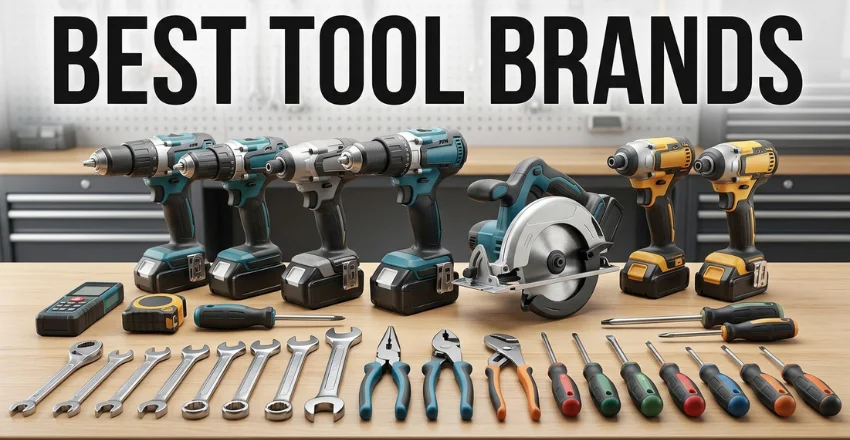
Choosing the best tool brands can save you from having to replace weak tools, buying duplicate batteries, or getting locked into the wrong cordless system. For most U.S. homeowners, DeWalt offers the strongest balance of selection, performance, and availability. Milwaukee suits frequent professional use, while Ryobi gives DIYers a broad cordless lineup at a lower entry cost.
Quick answer: For most buyers, start with DeWalt if you want one versatile cordless system. Choose Milwaukee for demanding trade work, Ryobi for home DIY value, or Makita for a large professional cordless lineup. Hand-tool buyers should also consider Klein Tools, Craftsman, and Stanley rather than forcing every purchase into a single brand.
| Quick fact | Recommendation |
|---|---|
| Best all-around choice | DeWalt |
| Best for professional trades | Milwaukee |
| Best value for homeowners | Ryobi |
| Best large cordless ecosystem | Makita |
| Best service-focused option | Ridgid |
| Best for electrical hand tools | Klein Tools |
| Best approach | Match the brand to your work and battery needs |
Best Tool Brands Compared for 2026
| Brand | Best for | Main system or strength | Main tradeoff |
|---|---|---|---|
| DeWalt | Most U.S. buyers | 20V MAX and FLEXVOLT | Premium kits can cost more |
| Milwaukee | Professional trades | M12 and M18 | High entry price |
| Makita | Serious DIY and professional use | LXT and XGT | Multiple platforms require planning |
| Ryobi | Homeowners and DIYers | 18V ONE+ | Less suited to constant heavy use |
| Bosch | Precision and professional work | 18V system | Smaller U.S. cordless selection than some rivals |
| Ridgid | Value-conscious serious users | 18V tools and service program | Service agreement has eligibility rules |
| Craftsman | Everyday home projects | V20 | Fewer specialist cordless choices |
| Klein Tools | Electrical work | Pliers, cutters, testers, hand tools | Not a general cordless platform |
| Stanley | Basic household hand tools | Measuring andmechanicalls tools | Limited power-tool focus |
1. DeWalt: Best All-Around Choice
DeWalt is a strong starting point if you expect your collection to grow. Its 20V MAX platform now covers more than 300 products, while FLEXVOLT adds higher-powered options for demanding work.
That range makes the brand useful for drilling, fastening, cutting, woodworking, renovation, and outdoor jobs without constantly having to buy new chargers.
Pros
- Large cordless selection.
- Easy to expand one battery collection.
- Suitable for DIYers and working professionals.
Cons
- Premium models can be expensive.
- Some tools are heavier than homeowner-focused alternatives.
Verdict: DeWalt is our top pick for a U.S. buyer who wants one dependable platform for many types of projects.
2. Milwaukee: Best for Professional Trades
Milwaukee focuses heavily on professional users through its M12 and M18 systems. Its catalog includes many specialized tools for plumbing, electrical, mechanical, construction, and maintenance work.
The smaller M12 system is also attractive when compact size matters.
Pros
- Strong range of trade-specific products.
- Compact M12 choices.
- Built around demanding jobsite use.
Cons
- Higher prices can be hard to justify for occasional DIY.
- Building a large battery collection gets expensive.
Verdict: Pick Milwaukee if your tools earn their keep through frequent professional work.
3. Makita: Best for a Large Professional Cordless System
Makita gives buyers two substantial cordless paths. The company lists more than 350 products in its 18V LXT system and more than 170 in its XGT system during 2026. XGT covers higher-demand 40V and 80V max equipment.
Makita also states that its lithium-ion tools, batteries, and chargers generally carry three-year warranties in the United States.
Pros
- Large LXT selection.
- Higher-output XGT system available.
- Strong choice for frequent users.
Cons
- Choosing between LXT and XGT takes planning.
- Premium kits can raise the initial cost.
Verdict: Makita makes sense for buyers who want a broad cordless system with room to move into heavier equipment.
4. Ryobi: Best Value for Homeowners
Ryobi is especially appealing if your projects include furniture assembly, repairs, yard work, cleaning, and occasional remodeling. The company says its 18V ONE+ system has maintained battery compatibility for 30 years and now covers more than 300 products.
That wide selection lets homeowners use the same battery family for far more than just drills and saws.
Pros
- Broad product selection.
- Strong value for occasional and regular DIY.
- Long-running battery compatibility.
Cons
- Not our first pick for all-day construction work.
- Product performance varies by tier.
Verdict: Ryobi is the easiest recommendation for a homeowner who wants useful cordless variety without professional-level spending.
5. Bosch: Best for Precision-Focused Buyers

Bosch remains a solid choice for woodworking, drilling, fastening, measuring, and other jobs where control matters. Its current U.S. warranty terms provide eligible Bosch 18V cordless power tools and chargers with a five-year limited warranty, and 18V batteries with a three-year limited warranty.
Pros
- Strong reputation in precision-oriented categories.
- Competitive warranty on current 18V products.
- Good fit for workshop use.
Cons
- Cordless selection is not as broad as the largest ecosystems.
- Availability can differ by tool category.
Verdict: Bosch is worth considering when the specific tool you want matters more than owning the largest battery family.
6. Ridgid: Best for Long-Term Service Value
Ridgid stands out because eligible U.S. power-tool purchases can qualify for its Lifetime Service Agreement. Registration and other conditions apply. The program can cover service, parts, and replacement batteries for qualifying products owned by the original purchaser.
Ridgid also offers an 18V cordless line with cross-generation battery compatibility.
Pros
- Attractive service program for eligible purchases.
- Professional-oriented 18V range.
- Good middle ground between DIY and premium tiers.
Cons
- Registration rules matter.
- Lifetime Service Agreement eligibility is not automatic for every purchase.
Verdict: Ridgid deserves a close look if long-term ownership costs matter to you.
7. Craftsman: Best for Everyday Home Projects
Craftsman works well for homeowners who need common drills, drivers, sanders, mechanic’s tools, storage, and lawn equipment. Its V20 system spans cordless power tools and outdoor equipment, and several current V20 products carry three-year limited warranties.
Pros
- Familiar range of household and garage tools.
- Accessible choice for routine DIY.
- One V20 system covers several categories.
Cons
- Smaller specialist cordless range than top pro platforms.
- Serious tradespeople may outgrow parts of the lineup.
Verdict: Craftsman fits homeowners who want capable tools without building a contractor-grade collection.
If painting is one of your next projects, Renovixa’s guide to painting trim cleanly explains the brushes, sanding supplies, and preparation tools you’ll need.
8. Klein Tools: Best for Electrical Hand Tools
Klein Tools is different from the cordless brands above. Its focus is electrical and utility work, including pliers, cutters, screwdrivers, testers, and related equipment. Klein also continues to invest in U.S. manufacturing.
Pros
- Specialized electrical-tool focus.
- Strong hand-tool selection.
- Useful for electricians and serious electrical DIY.
Cons
- Not a full household cordless ecosystem.
- Specialty products may cost more than basic hand tools.
Verdict: Choose Klein for electrical work rather than expecting a single power-tool company to supply every hand tool.
9. Stanley: Best for Basic Hand Tools
Stanley is a practical option for tape measures, sockets, ratchets, wrenches, and other household basics. Its U.S. warranty information includes full lifetime coverage for qualifyingmechanic’sss tools and limited lifetime coverage for several other hand-tool categories.
Pros
- Good range of household basics.
- Widely useful for first toolboxes.
- Strong warranty coverage on qualifying hand tools.
Cons
- Not the choice for building a major cordless system.
- Better suited to hand tools than high-demand power equipment.
Verdict: Stanley is a sensible place to fill gaps in a household toolbox.
How We Chose the Best Tool Brands for U.S. Buyers
A logo alone tells you little about whether a purchase will work for you. We focused on five practical factors that affect ownership:
- Battery compatibility: Cordless batteries and chargers are expensive enough to make switching platforms costly.
- Range of tools: A larger system gives you more ways to reuse batteries.
- User type: A contractor and a homeowner may need different levels of durability and specialization.
- Warranty and service: Coverage can change the real cost of owning a tool.
- Project fit: The right brand for a drill may not be the right brand for your favorite pliers, tape measure, or specialty tool.
Independent home-improvement evaluations also tend to separate brands by use case rather than naming one winner for every buyer. Current guides highlight DeWalt, Milwaukee, Makita, Ryobi, Craftsman, and Stanley for different user types.
Choose a Battery Platform Before You Build a Cordless Collection
Your first cordless drill can influence the next five or ten purchases. Batteries are usually proprietary, so switching systems often means buying new packs and chargers.
Look beyond the starter kit. Check whether the same system has the circular saw, impact driver, sander, nailer, outdoor equipment, and specialty products you may want later.
For example, a bathroom installation project can require drivers, measuring tools, pliers, and other equipment. Renovixa’s dishwasher replacement guide shows how quickly a simple home job can require several tools.
Planning a more carpentry-heavy project? The Renovixa wainscoting installation guide includes saws, measuring equipment, levels, and fastening tools.
Should You Stick to One Brand?
For cordless power tools, usually yes. Staying within one main battery system cuts the number of chargers and spare batteries you need.
Hand tools are different. There’s little reason to buy a weaker wrench, pair of pliers, level, or tape measure simply because its logo matches your drill.
A practical home workshop might use Ryobi or DeWalt cordless equipment, Klein electrical pliers, and Stanley measuring tools. Brand loyalty should reduce cost and clutter, not limit your choices.
Final Recommendation
Start with the work you expect to do, not the brand color you like.
Choose DeWalt if you want the safest all-around cordless recommendation. Pick Milwaukee for frequent professional trade work, Ryobi for homeowner value, and Makita for a large professional-grade cordless lineup.
Then mix in specialist hand tools where they make sense. That approach gives you fewer batteries, better tools for each job, and a collection you can expand without wasting money.
FAQs
They can be if you use them frequently, depend on them for income, or need a specialty product. Occasional homeowners often get better value from midrange equipment.
Yes. Mixing hand-tool brands is easy and often smart. For cordless equipment, staying mostly within one battery platform can reduce battery and charger costs.
Ryobi is our value pick because its ONE+ battery platform covers more than 300 products and has a long history of battery compatibility.
DeWalt is our pick for the broader group of U.S. buyers because its system fits serious DIY and professional work. Milwaukee is especially strong for tradespeople who need specialized cordless products.
The best tool brands for most homeowners include DeWalt, Ryobi, Craftsman, Makita, Bosch, and Ridgid. Ryobi is especially attractive for value and variety. DeWalt is a stronger fit if you expect to tackle frequent renovations or heavier projects.