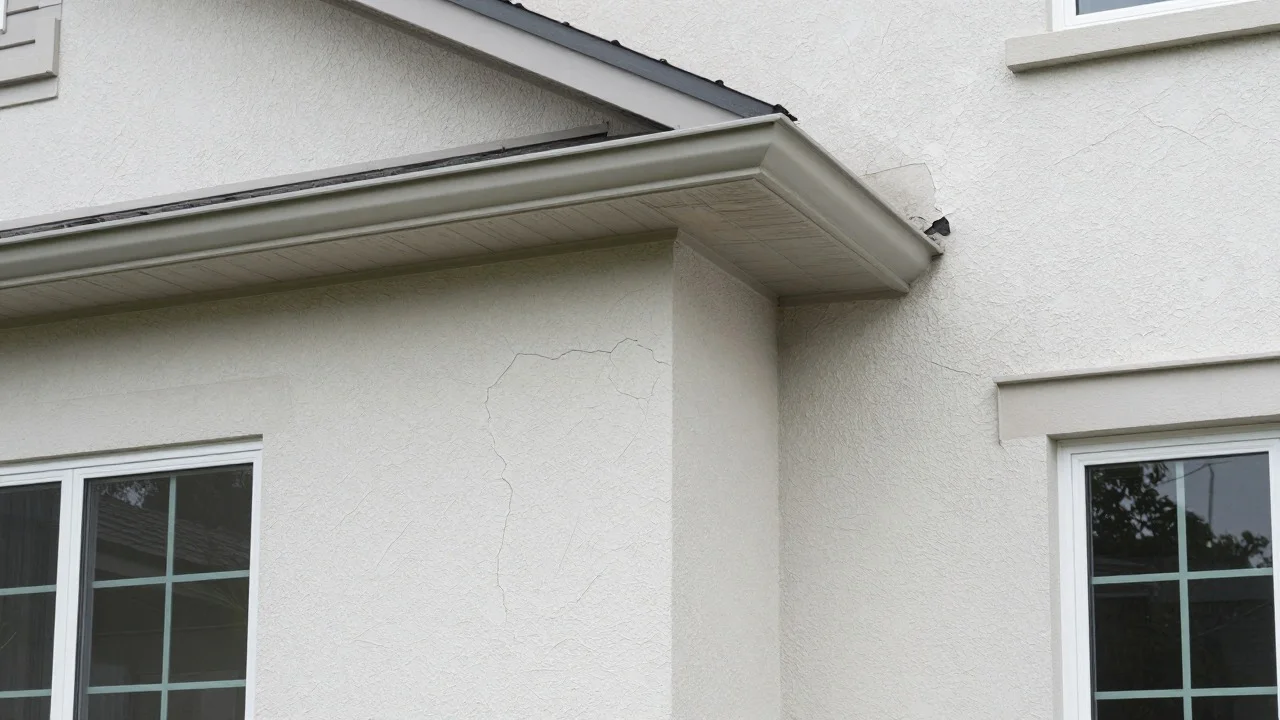
Cracks in an exterior wall can look minor while hiding a drainage, flashing, or movement problem. The right stucco repair starts by deciding whether the damage is cosmetic or a sign of moisture or structural movement. That decision controls the material, cost, and whether DIY work makes sense.
Short answer: Small, isolated cracks and chips can often be patched at home. Recurring cracks, staining, bulging, soft areas, or damage around windows and roof transitions need closer inspection. Before patching, identify why the wall failed, remove loose material, use a compatible product, match the texture, and protect the finished area from water.
| What you see | What it may indicate | Sensible next step |
|---|---|---|
| Fine, isolated crack | Normal shrinkage or minor movement | Monitor and patch if stable |
| Small chip or shallow hole | Local impact or surface failure | DIY patch may be reasonable |
| Crack that returns after patching | Ongoing movement or unresolved cause | Inspect before patching again |
| Staining, softness, or bulging | Possible moisture behind the finish | Call a qualified professional |
| Large loose or hollow area | Loss of bond or deeper wall damage | Professional assessment |
This decision matrix matters because the visible crack is not always the whole problem. Crack direction, nearby openings, staining, drainage, and loose areas provide clues about what is happening behind the surface.
Key takeaways
- Patch a small, stable surface defect only after checking for moisture and movement.
- Recurring, diagonal, horizontal, stained, soft, or bulging areas deserve closer inspection.
- National cost guides put many professional projects in the hundreds to low thousands of dollars.
- A moving crack may need a flexible sealant rather than a rigid mortar.
- Deep patches often need several thin applications instead of one thick fill.
- Fix drainage or flashing problems before spending money on the finish.
7 Signs Your Stucco Needs More Than a Cosmetic Patch
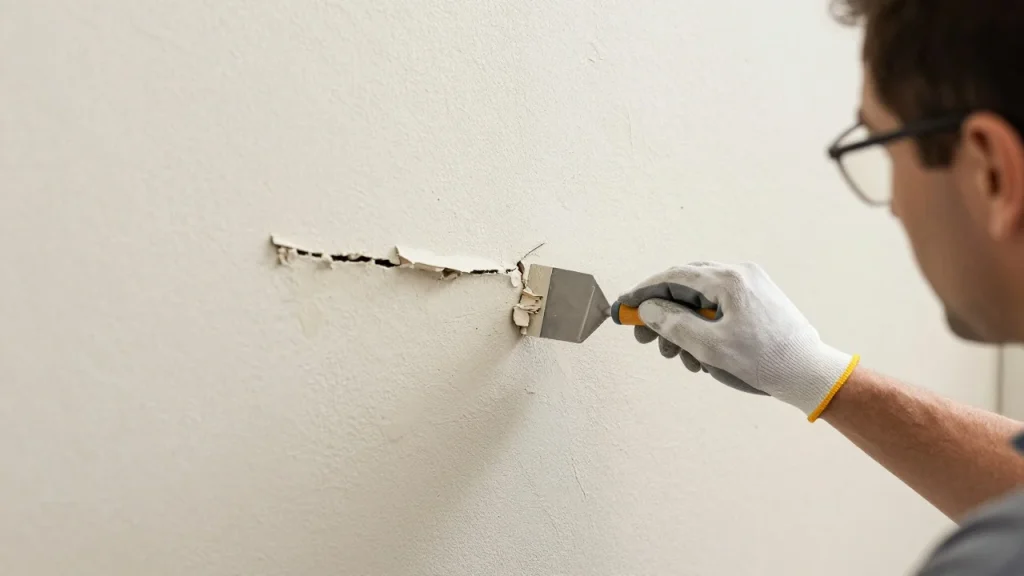
A crack’s size matters, but its pattern and surroundings can tell you more. Check the full wall before deciding that a tube of filler will solve the problem.
- The crack comes back. Repeated failure often means movement or moisture has not been corrected.
- A crack runs diagonally from a window or door. Openings concentrate stress and can reveal movement nearby.
- You see horizontal or stair-step cracking. These patterns deserve more attention than a random hairline mark.
- Brown or dark staining surrounds the damage. Discoloration can point to repeated water exposure.
- The wall feels soft or looks swollen. Those symptoms can indicate deterioration below the finish.
- A section sounds hollow when gently tapped. A hollow area may have separated from its backing.
- Damage clusters near rooflines, windows, pipes, or deck connections. These are common places for water-entry problems.
None of these signs proves structural failure by itself. They do tell you to investigate the cause instead of covering the symptom.
What Usually Causes Exterior Wall Damage?
Exterior plaster can fail because of shrinkage, building movement, impact, poor drainage, failed flashing, water entry, or loss of bond. The location of the damage often narrows the list. Petrus recommends checking windows, doors, roof transitions, drainage, penetrations, and material joints around the affected area.
Movement may start lower in the building. If wall cracking appears alongside other foundation symptoms, Renovixa’s guide to foundation movement and repair costs can help you understand the warning signs before paying for cosmetic work.
Water deserves the same attention. Overflowing gutters can repeatedly wet exterior walls and the ground beside a foundation. Review Renovixa’s breakdown of gutter cleaning costs and drainage maintenance if roof runoff is reaching the damaged area.
How Much Does Stucco Repair Cost in 2026?
Professional stucco repair averages about $1,630 in Angi’s 2026 cost data, with many projects ranging from $599 to $2,662. Minor work may start near $250, while extensive restoration can reach $6,900 or more. Angi also reports a broad range of about $8 to $50 per square foot.
This Old House reports similar variation by repair type. Small crack work may fall around $8 to $20 per square foot. Water-related repairs can reach roughly $30 to $50 per square foot because the damaged area may extend below the visible finish.
Treat those numbers as planning ranges, not quotes. Height, access, hidden moisture, damaged backing, texture matching, paint, and local labor all affect the final price. A useful estimate should explain what will be removed, rebuilt, sealed, textured, and painted.
Can You Fix Small Stucco Cracks Yourself?
Yes, when the defect is small, accessible, stable, and free from moisture warning signs. QUIKRETE describes its premixed patch as suitable for small, non-structural aesthetic repairs. Larger or recurring problems need a different approach.
What you’ll need
- Safety glasses and work gloves.
- Wire brush.
- Putty knife or margin trowel.
- Utility knife or chisel when loose material must be removed.
- Caulk gun for a cartridge product.
- Compatible premixed stucco patch or exterior repair sealant.
- Texture tool, sponge, or float.
- Primer and exterior paint when the product instructions call for them.
A five-step repair sequence
- Inspect the area first. Look for staining, softness, loose sections, nearby leaks, and cracks that continue growing.
- Remove weak material. Brush away dust and anything that no longer bonds firmly to the wall.
- Choose the product by crack behavior. A moving crack may suit flexible sealant. A stable defect may accept repair mortar or patch compound.
- Build deep areas gradually. QUIKRETE advises applying patches deeper than 1/4 inch in multiple layers instead of one thick application.
- Match the texture and finish. Follow the product’s cure time before priming or painting the repaired area.
Compatibility matters as much as appearance. The International Masonry Institute advises matching repair material to the existing wall’s strength, density, porosity, and water absorption. An excessively hard or dense patch can contribute to later failure around the repaired spot.
When the patch is ready for coating, Renovixa’s guide to choosing exterior paint covers products designed for masonry and similar exterior surfaces.
When a Professional Is the Safer Choice
Call a qualified exterior contractor or building professional when the damage:
- Returns after previous patching.
- Keeps widening.
- Runs diagonally or horizontally.
- Includes staining, softness, swelling, or mold concerns.
- Covers a large or hollow-sounding section.
- Sits around a roof-wall joint, window, chimney, deck connection, or penetration.
- Appears alongside other signs of building movement.
This Old House recommends professional help for complex water damage, recurring cracks, large failures, and conditions that suggest problems below the surface. Petrus gives similar advice when moisture or repeated cracking points to a broader cause.
A stucco contractor may need to remove a section to inspect the backing, lath, flashing, or water-management layer. Localized damage with sound material around it can often be rebuilt in place. Widespread detachment or recurring moisture may call for a larger removal and reconstruction.
How to Keep the Damage From Coming Back
Start with water management. Keep gutters clear, direct downspouts away from walls, and check roof-to-wall transitions after heavy weather. Do not let sprinklers repeatedly soak the same exterior section.
Inspect previous repairs once or twice a year. A crack that reopens deserves a cause-based diagnosis before another layer goes over it.
Clean adjacent masonry without using more pressure than the surface can handle. Renovixa’s concrete-cleaning guide compares cleaning approaches and explains when lower-pressure methods make more sense.
Paint is the final layer, not the cure for movement or trapped moisture. Repair the source first, allow the patch to cure, then use a coating suited to the wall and local exposure.
Repair the Cause Before You Hide the Crack
If your stucco has one small, stable surface defect, document it, check for moisture, and choose a compatible patch. If the crack returns, spreads, stains, bulges, or feels soft, stop treating it as a cosmetic problem.
Start with the source. Check drainage, nearby openings, roof transitions, and signs of building movement. That extra inspection can prevent you from paying twice for a repair that never addressed the reason the wall failed.
Frequently Asked Questions
A small surface patch may be applied in one work session, but drying and curing can extend the job. Deeper repairs often require several layers. QUIKRETE recommends multiple applications when a patch is more than 1/4 inch thick, so product instructions should control the schedule.
A crack can provide a path for water when surrounding flashing, joints, or the wall’s water-management system also has a weakness. Staining, softness, swelling, or repeated cracking are stronger reasons to investigate moisture instead of applying another surface patch.
Yes, after the repair product has cured and the manufacturer allows coating. Some patch products call for priming before paint. Match the new coating to the existing finish and use an exterior product suitable for masonry.
Repair usually makes sense when damage is isolated and the surrounding assembly remains sound. Broader removal may be more appropriate when moisture, loss of bond, or repeated failure affects a larger area.