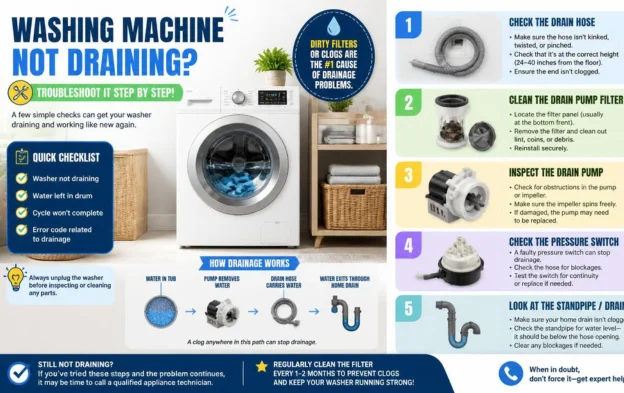
A washer that stops with water inside usually has a blocked drain path, a bad setting, or a failed component. If you need to know how to fix washing machine not draining problems, start with simple checks first. Unplug the appliance before opening filters, moving hoses, or reaching near internal parts.
Quick answer: Start by running a drain or spin cycle, then unplug the washer and remove standing water safely. Check the load, drain filter, drain hose, and household standpipe next. If those parts are clear, the drain pump, lid switch, door lock, wiring, or controls may need professional diagnosis.
| Symptom | Likely area | First check |
| Water remains after the cycle | Filter, hose, or pump | Run drain/spin, then inspect the drain path |
| Washer hums but water stays | Blocked filter or pump | Drain the tub and check accessible debris |
| No pump sound | Door lock, lid switch, pump, or controls | Check the manual and visible safety interlocks |
| Water drains slowly | Partial clog or hose restriction | Inspect the filter, hose, and standpipe |
| Water backs up around the standpipe | Household drain | Stop the washer and address the plumbing blockage |
Key Takeaways
- Start with the cycle and load before replacing parts.
- Unplug the washer and let hot water cool before opening a filter.
- Clean a user-serviceable filter only when your model manual identifies one.
- Inspect the drain hose and household standpipe before replacing the pump.
- Call a technician when the drain path is clear but the washer still will not empty.
Why a Washer Stops Draining
The drain system moves water from the tub through a pump and hose into your household drain. A restriction anywhere along that route can leave water inside the drum. A failed safety switch can also stop the cycle before draining finishes.
Front-load models often have an accessible pump filter, but some top-load models do not. Filter locations and service procedures vary by brand and model. Check the owner’s manual before removing any panel or cap.
What You’ll Need Before Troubleshooting
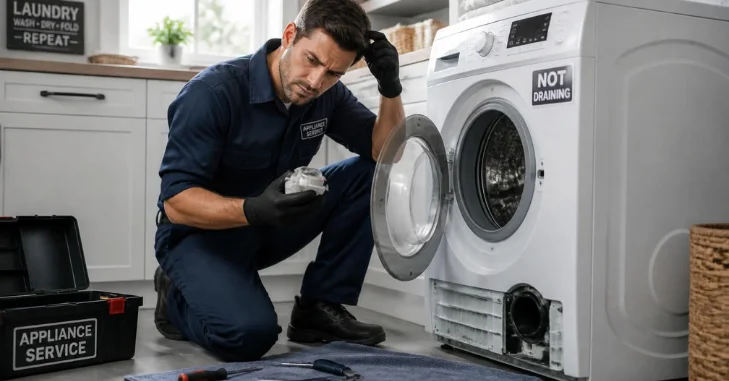
How to fix washing machine not draining. Most basic checks need only simple household items and a dry work area. Keep water away from plugs, outlets, and extension cords. If you cannot disconnect power safely, stop and call a qualified technician.
- Shallow pan or bucket
- Absorbent towels
- Flashlight
- Work gloves
- Pliers for an external hose clamp, if your manual allows removal
- Your washer’s model number and owner’s manual
How to Fix Washing Machine Not Draining Problems in 8 Steps
Work through these checks in order because the early steps are faster and less invasive. Do not replace a pump before confirming the drain path is clear. A blockage can mimic a failed part and waste money.
- Run a drain or spin cycle. Remove heavy items if the load is badly unbalanced. Restart only after the drum can move normally, and the door closes correctly.
- Disconnect power and let hot water cool. Unplug the washer before opening a filter or touching a hose. If a hot cycle ended recently, allow the water to cool before draining it.
- Remove standing water safely. Use the emergency drain hose if your model has one. Otherwise, follow the manufacturer’s manual for safe draining before opening the pump filter.
- Clean the accessible drain filter. Place towels and a shallow pan under the access area. Remove lint, coins, hair, buttons, and other debris, then reinstall the filter securely.
- Inspect the drain hose. Look for kinks, crushing, sharp bends, or visible blockage behind the washer. Confirm the hose height and routing match the installation instructions for your model.
- Check the household standpipe or drain. Watch for water rising or backing up when the washer discharges. A plumbing blockage can look like an appliance failure even when the pump works.
- Listen to the drain pump. A steady hum with little flow can suggest a restriction or jam. Silence can point toward the pump, wiring, door lock, lid switch, or control system.
- Stop before unsafe electrical diagnosis. Internal voltage tests and pump replacement require model-specific procedures. Call a technician if the basic drain path is clear but the machine still will not empty.
Step-by-Step Checks That Prevent Common Mistakes
Check the Cycle and Load Before Taking Anything Apart
Some cycles use lower spin speeds, and an unbalanced load can interrupt normal operation. Redistribute bulky items and confirm the selected cycle includes draining and spinning. Then run a drain or spin cycle once before opening the machine.
If the washer empties normally after you rebalance the load, the drain system may be fine. Repeated problems with similar loads still deserve investigation. Avoid overloading the drum or packing one heavy item on one side.
Drain Standing Water Without Flooding the Floor
Prepare for more water than you expect, especially with a full front-load drum. Use a shallow container because a tall bucket may not fit below the access door. Keep several towels nearby before loosening any drain cap.
LG and Samsung’s U.S. support pages provide model-specific draining procedures. Both also caution users about hot water during drain troubleshooting. Follow your manual if its steps differ from general guidance.
Clean the Pump Filter Only When Your Model Has One
Many front-load washers place the pump filter behind a small lower access door. Some machines use a different arrangement or lack a user-serviceable filter. Never force a panel open because another model has a filter there.
Remove debris gently and inspect the filter seal before reinstalling it. A crooked cap or damaged seal can cause a leak during the next cycle. Tighten the filter according to the manufacturer’s instructions, not by excessive force.
Inspect the Drain Hose and Its Installation
A hose can look clear from the front while being pinched behind the cabinet. Pull the washer forward only if you can do so safely. Do not stretch supply lines, power cords, or drain connections while moving it.
Samsung’s U.S. guidance identifies drain-hose installation as a common source of draining trouble. Whirlpool’s washer-drain guidance also recommends checking hose routing and installation height. Correct placement matters because each model has specific installation requirements.
If you maintain other appliance drain lines, Renovixa’s garbage disposal cleaning guide covers ways to reduce kitchen drain buildup. The systems are different, but the same troubleshooting principle helps. Clear simple drain-path problems before assuming an appliance has failed.
Separate a Washer Problem From a Household Drain Problem
A clogged standpipe can prevent water from leaving even when the washer pumps correctly. Watch the drain opening during a test cycle from a safe distance. Stop the machine if wastewater rises, spills, or backs up.
Do not keep running cycles into a blocked household drain. Repeated testing can flood the laundry area and damage nearby finishes. A plumber may be the right professional when the standpipe or branch drain is the problem.
Use Pump Noise as a Clue, Not a Final Diagnosis
A humming pump with weak flow often points toward a blockage, jam, or failing pump. A silent drain phase can have several electrical or mechanical causes. Noise alone cannot identify the failed part with certainty.
Skip universal resistance numbers because pump specifications differ across models. Use the service information for the exact washer when electrical testing is appropriate. If that information is unavailable, professional diagnosis is safer than guessing.
When to Stop DIY Troubleshooting
Stop if you find burned wiring, a damaged power cord, a leaking electrical area, or a strong smell of overheating. Also stop when a panel exposes live electrical parts or sealed assemblies. These conditions go beyond routine homeowner maintenance.
Professional service also makes sense when the filter and hose are clear but draining still fails. The technician can test the pump, lock, switch, wiring, pressure system, and controls. That diagnosis helps prevent replacing good parts one by one.
If appliance failures are changing your replacement plans, Renovixa’s appliance brand guide offers a broader buying checklist. For another appliance installation example, review the dishwasher replacement guide. Both can help with longer-term appliance maintenance and replacement planning.
How to Reduce Future Drain Problems
Empty pockets before washing and place small items in a mesh laundry bag. Use the detergent amount specified for your machine and water conditions. Excess suds can interfere with normal washing and draining behavior.
Check the drain hose periodically for crushing or sharp bends behind the washer. Clean an accessible pump filter at the interval stated in your manual. Do not copy another brand’s maintenance schedule without checking your model.
Pay attention when draining becomes slower than usual, or clothes finish unusually wet. Early symptoms can reveal a partial restriction before the machine stops completely. Addressing the drain path early also reduces the chance of a messy overflow.
The Practical Next Step
Start with the cycle, standing water, filter, hose, and household drain before considering parts. Those checks can separate a simple blockage from a component failure. Keep your model manual nearby because access points and procedures vary.
If the washer still holds water after those checks, book qualified appliance service. Give the technician the model number, error code, and any pump sounds you heard. That information can shorten diagnosis and help you avoid unnecessary part replacements.
Frequently Asked Questions
Why is my washer not draining but still spinning?
A partial restriction can allow some water movement while leaving too much water behind. Check the filter, drain hose, and household drain before assuming the motor failed. An unbalanced load or weak pump can also affect the cycle.
How can I manually drain a washer full of water?
Unplug the appliance and let hot water cool before opening any drain access. Use the emergency drain hose when your model provides one. Otherwise, follow the owner’s manual because safe draining methods differ by design.
How do I know if the drain pump is clogged or failed?
A hum with little or no water movement can indicate a restriction or jam. A silent pump does not prove the pump itself failed. Wiring, switches, locks, and controls can also prevent the pump from operating.
How to fix washing machine not draining if the filter is clean?
Next, inspect the drain hose, standpipe, load balance, door or lid lock, and pump behavior. Confirm hose routing matches the installation manual. If those checks are normal, a technician should diagnose electrical or internal mechanical faults.
Can a clogged household drain make the washer stop emptying?
Yes, a blocked standpipe or branch drain can prevent discharged water from flowing away. You may see water rise around the hose or spill from the standpipe. Stop testing if that happens and address the plumbing blockage first.