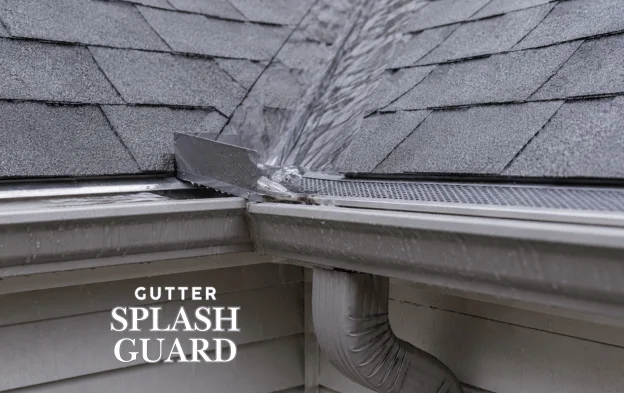
Water that shoots past a gutter at a roof valley can soak siding, scatter mulch, and send runoff beside the foundation. A gutter splash guard is a small shield fitted at the high-flow point to help keep fast-moving rainwater within the gutter rather than letting it overshoot the front edge.
Direct answer: A valley splash guard works best when a concentrated stream of roof runoff overshoots an otherwise clean, correctly draining gutter. It raises the outer edge at the problem spot and redirects water into the channel. It won’t fix a clogged downspout, poor gutter pitch, or a system that is too small for the roof.
| Key question | Practical answer |
|---|---|
| Main purpose | Catch concentrated roof-valley runoff before it overshoots |
| Best location | Inside corners, roof valleys, and other high-flow points |
| Common material | Aluminum or similar weather-resistant sheet material |
| DIY-friendly? | Often, if the gutter is safely accessible |
| Main limitation | It cannot correct clogs, poor pitch, or inadequate gutter capacity |
| Maintenance | Inspect after storms and keep nearby gutter sections clear |
What a Splash Guard Does
Roof valleys collect runoff from two roof planes and send it toward a relatively small section of gutter. During heavy rain, that concentrated flow can move fast enough to cross the outer lip rather than drop neatly into the channel. Splash guards create a higher barrier at that point and direct more of the water into the gutter.
This makes the device different from products designed mainly to stop leaves or manage water after it leaves a downspout.
| Device | Where it sits | Main job |
| Valley splash guard | Outer edge of a gutter near a valley or corner | Reduces water overshoot |
| Gutter or leaf guard | Across the top of the gutter | Reduces debris entering the channel |
| Downspout splash block | On the ground below a downspout | Directs discharged water away from the immediate outlet |
A standard gutter guard primarily limits leaves, sticks, and similar debris. It does not serve the same purpose as a raised valley deflector.
Where a Gutter Splash Guard Works Best

Look at the gutter during steady or heavy rain if you can do so safely from the ground. A localized waterfall at a roof valley is the clearest sign that a water deflector may help.
Other signs include:
- Mulch or soil washing away directly below a valley.
- Repeated splash marks on siding or fascia.
- Water hitting a walkway from one section of gutter.
- Pooling near the house below an inside roof corner.
- Overflow at one point while the rest of the gutter drains normally.
Placement matters. The guard should sit where the concentrated stream reaches the gutter, not simply at the nearest downspout. Longer or steeper valleys can produce more concentrated flow during heavy rain. That is why these guards are commonly used at interior corners and other roof transitions where runoff converges into a narrow area.
Check the Real Cause of Overflow First
Installing a deflector before checking the drainage system can hide the symptom without fixing the cause.
Use this simple diagnostic table before buying anything:
| What you see | Likely issue to check first | Best next step |
| Overflow only beneath a roof valley | Fast, concentrated runoff | Consider a valley deflector |
| Overflow along a long gutter section | Clog or insufficient capacity | Clean and inspect the system |
| Water sits in the gutter after rain | Poor pitch or blockage | Correct drainage before adding a guard |
| Gutter drains but downspout backs up | Downspout obstruction | Clear the downspout |
| Water still overshoots after a guard is fitted | Capacity or placement problem | Inspect gutter size, pitch, and guard position |
Renovixa’s guide to gutter cleaning and gutter-system maintenance explains why debris and blocked downspouts can cause overflow. A clean system should be the starting point before adding accessories.
Even a properly installed deflector has limits. This Old House notes that some overflow problems require other gutter modifications rather than a splash shield alone.
How to Install a Valley Water Deflector
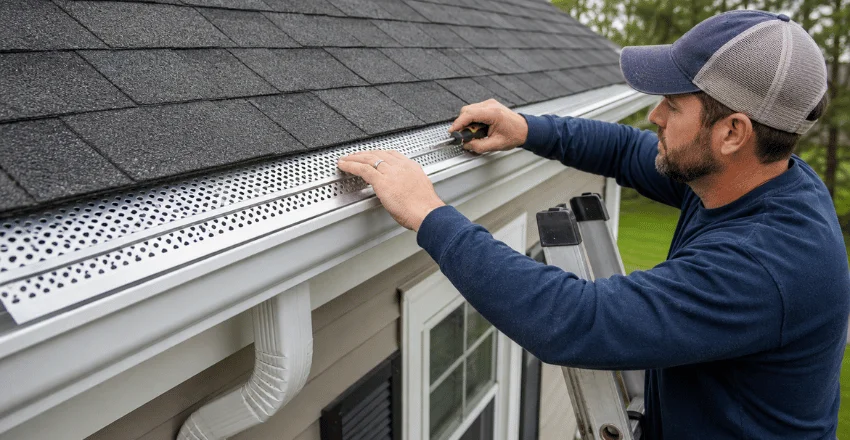
A simple installation is possible on many open-top gutter systems. Do not attempt roof-edge work if you cannot access the area safely.
What you’ll need
- Correctly shaped straight or corner guards.
- Corrosion-resistant screws or rivets specified for the product.
- Drill or driver.
- Suitable sealant if the manufacturer calls for it.
- Gloves and eye protection.
- Safe ladder equipment where required.
Installation steps
- Clean the gutter. Remove leaves, grit, and standing debris around the problem area.
- Identify the runoff path. Find the exact point where the roof valley sends water toward the gutter.
- Position the guard. Place it along the outer gutter edge so it intercepts the fast-moving stream.
- Check the fit. Make sure the part does not block the normal gutter channel or trap debris unnecessarily.
- Secure the fasteners. Use the screw or rivet locations recommended for the product.
- Seal gaps if required. A small bead of compatible sealant can prevent water from seeping beneath certain designs.
- Test the drainage. Use a controlled flow from a hose or observe the next rainfall from ground level. Water should enter the gutter and continue toward the downspout.
Current installation guidance commonly follows this clean, position, fasten, seal, and test sequence. Before drilling, check the gutter manufacturer’s warranty. Some systems may restrict homeowner modifications. Today’s Homeowner specifically recommends checking warranty terms before a DIY installation.
What Does It Cost?
A gutter splash guard is one of the smaller gutter-drainage upgrades. Material-only DIY sets are commonly sold as inexpensive multi-packs, and current marketplace listings often fall in the low tens of dollars. Prices vary by material, finish, dimensions, and included fasteners.
Professional installation costs depend far more on access than on the small piece of metal itself. A contractor may need to clean the gutter, correct loose sections, work from a tall ladder, or address a downspout problem during the same visit. More from us: Gutter Install Near Me.
If overflow has already contributed to water collecting near the structure, Renovixa’s foundation repair and drainage guide explains why gutter and grading problems deserve attention before moisture becomes a larger issue.
When a Splash Guard Is Not Enough
A water shield is a targeted fix, not a substitute for a working drainage system.
Consider another repair when:
- Debris fills the gutter.
- The downspout cannot carry water away.
- The gutter slopes away from the outlet.
- Seams or end caps leak.
- The gutter has pulled away from the fascia.
- Overflow occurs along most of the roofline rather than at a single valley.
- Water still escapes after the guard is positioned correctly.
In those cases, cleaning, repairing, adding drainage capacity, or changing the gutter size may more effectively address the underlying problem.
Roof condition matters too. Debris on the roof can wash directly into valleys and gutters. Renovixa’s roof cleaning and maintenance guide is a useful companion when runoff problems start higher on the roof.
Maintenance After Installation
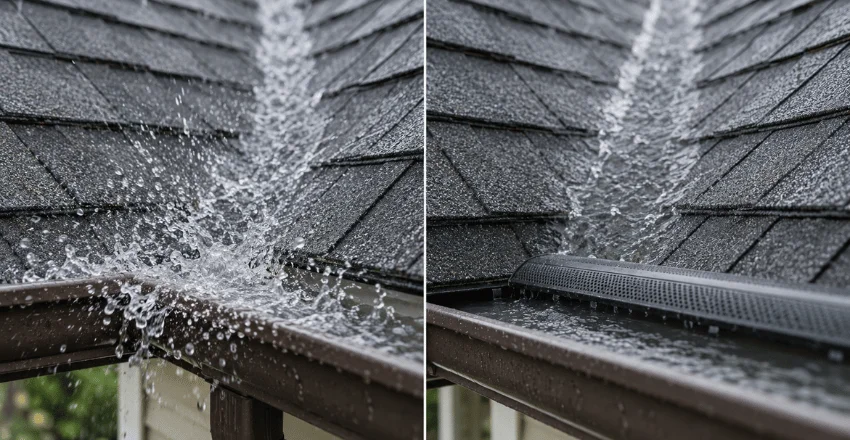
Inspect the problem area after the first few periods of heavy rain. Look for water slipping beneath the guard, loose screws, trapped leaves, or a new overflow point beside the installed section. Keep the surrounding channel and downspout open. A deflector can redirect water into the gutter, but that water still needs an unobstructed route away from the house.
Also check the fasteners during routine gutter maintenance. Thin metal parts can shift if screws loosen or if ice, branches, or accumulated debris put pressure on them.
The Best Next Step
Start by watching the problem area during rain from a safe location. If clean gutters drain normally and one roof valley still sends water over the edge, a small valley deflector can be a sensible fix. If water backs up across a larger section, diagnose the gutter and downspout system first.
Fixing the cause will protect the siding, landscaping, roof edge, and drainage around the foundation more effectively than adding accessories to a system that cannot carry the water.
Frequently Asked Questions
Yes, when the problem is localized roof-valley overshoot. They are designed to keep concentrated runoff from crossing the outer gutter edge. They are less useful when the actual problem is a clog, poor pitch, a damaged gutter, or inadequate drainage capacity.
Install it along the outer edge where a roof valley or inside corner sends concentrated water into the gutter. The correct position depends on the runoff path, so observe the problem area before fastening the part.
No. Leaf and gutter guards mainly limit debris entering the gutter. A valley deflector is intended to manage fast-moving water at a concentrated runoff point.
Service life depends on the material, coating, weather exposure, and installation quality. Inspect it during normal gutter maintenance and replace it if it bends, corrodes, loosens, or no longer directs water correctly.
Often, yes, when the gutter is safely accessible, and the product is designed for simple screw-on installation. If the work requires unsafe ladder positioning, roof access, or gutter repairs, hire a qualified gutter or roofing professional.